As a Certified Equestrian Property Specialist and Global Equestrian Advisor with E&V Land and Ranch, Lisa Bricker works with buyers and sellers across East Texas
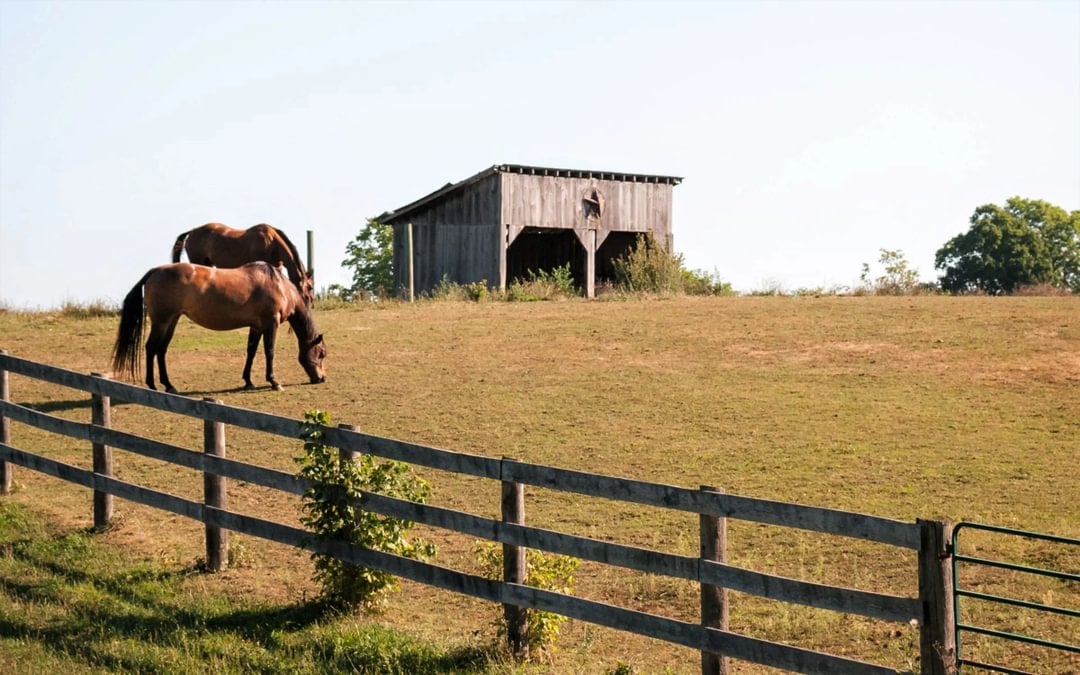
East Texas is unlike any other equestrian market in the state. Where North Texas delivers cross-timbers ranch land and Central Texas offers post oak savanna and rolling limestone country, East Texas gives you something else entirely: the Piney Woods. Dense pine and hardwood canopy, creek-fed bottomland, red dirt roads, and a pace of life that city buyers come looking for deliberately. This is recreational horse country at its most honest — trail riding through national forests, acreage priced well below the state average, and communities where horse ownership is simply part of how people live.
East Texas offers some of the most competitive land pricing in Texas. Improved horse properties with homes, barns, and pasture in Nacogdoches, Cherokee, Angelina, and the surrounding counties routinely list in ranges that would buy a bare lot in Parker or Denton county. Buyers coming from North Texas or Central Texas are often surprised by what their budget reaches here.
This is a distinct and sought-after way of living with horses. The tall pine canopy, the shade, the cooler microclimate compared to open-country West and Central Texas — East Texas offers a forested setting that draws buyers who want their horse property to feel like a retreat. Trail riding through the Sabine, Davy Crockett, Angelina, and Sam Houston National Forests is a genuine recreational draw that no other Texas region can match.
East Texas is defined by water. Toledo Bend Reservoir (one of the largest lakes in the South), Sam Rayburn Reservoir, Lake Fork, Lake Tawakoni, and dozens of smaller lakes and river systems make natural water access a realistic feature of many properties — something rare in drier Texas markets.
The East Texas horse property market is less competitive than North and Central Texas equivalents. Buyers have more time to evaluate, fewer bidding wars, and more negotiating room. For buyers priced out of Weatherford or Pilot Point, East Texas delivers functional equestrian land without the market pressure.
Nacogdoches is the oldest town in Texas. Marshall, Carthage, and Center have agricultural communities where livestock ownership is generational. These are not bedroom communities where horses are an afterthought — they are places where the horse culture runs through the land itself.
Counties: Bowie, Cass, Delta, Franklin, Hopkins, Lamar, Morris, Red River, Titus
Anchor cities: Texarkana (Bowie County), Paris (Lamar County), Mount Pleasant (Titus County)
The Ark-Tex corridor sits at the northernmost edge of East Texas, where Texas meets Arkansas and Louisiana. The terrain is a mix of post oak woodland, bottomland timber, and improved pasture — flatter than Deep East Texas but still heavily wooded. Lamar County (Paris) and Hopkins County (Sulphur Springs) anchor the western edge of this zone, with rolling farmland and established agricultural operations. Bowie County (Texarkana) bridges into Arkansas, and buyers here often have ties to the Ark-La-Tex tri-state area.
This zone suits buyers looking for working cattle and horse operations, larger pasture acreage in the 50 to 200-acre range, and authentic farm country at prices well below the Dallas-Fort Worth market. Hopkins County in particular has a strong livestock tradition and some of the best improved pasture in the region.
What to know: The Red River forms the northern boundary of this zone, and flood plain awareness is essential for properties near river bottoms. Soil quality varies significantly — sandy loam in the uplands drains well and supports good pasture, while creek-bottom clay requires careful drainage management for arenas and turnouts.
What to know before you buy in Grayson County: well water production is critical (aim for 10+ gallons per minute), soil composition varies significantly between east and west county, and flood plain awareness near Red River tributaries is essential. AG exemptions are well-established and widely used.
Counties: Anderson, Camp, Cherokee, Gregg, Harrison, Henderson, Marion, Panola, Rains, Rusk, Smith, Upshur, Van Zandt, Wood
Anchor cities: Tyler (Smith County), Longview (Gregg County), Marshall (Harrison County), Jacksonville (Cherokee County), Henderson (Rusk County)
This is the commercial and cultural core of East Texas, anchored by Tyler and Longview. Smith County (Tyler) is the most populated county in East Texas and offers the broadest range of equestrian properties — from smaller hobby farms on 10 to 20 acres within easy reach of the city to larger working operations in the county's rural precincts.
Van Zandt County and Wood County, on the western edge of this zone, border North Texas and offer a transitional landscape where Piney Woods gives way to post oak and cross-timbers terrain. Lake Fork Reservoir in Wood County is one of the most famous bass fishing lakes in the country and draws lifestyle buyers who want lakefront or lake-adjacent horse properties — a genuinely rare combination.
Cherokee County (Jacksonville) and Rusk County (Henderson) deliver authentic Deep East Texas horse country: red dirt roads, pine and hardwood timber, improved coastal Bermuda pastures, and working facilities that have been in families for generations.
What to know: The Tyler market attracts buyers relocating from DFW who want more land for less money. Properties within 30 minutes of Tyler's medical corridor and commercial amenities carry a premium. The further east you go into Gregg, Harrison, and Panola counties, the more rural the character and the lower the price per acre. Harrison County (Marshall) borders Louisiana and carries strong Deep South cultural influence.
Key buying considerations in Denton County: proximity to Ray Roberts Lake State Park offers trail access that adds real value to nearby properties; soil quality in the Pilot Point corridor is excellent for grazing; and the county's growth pressure means rural-feeling parcels with good road frontage are appreciating steadily.
Counties: Angelina, Houston, Jasper, Nacogdoches, Newton, Polk, Sabine, San Augustine, San Jacinto, Shelby, Trinity, Tyler (county)
Anchor cities: Lufkin (Angelina County), Nacogdoches (Nacogdoches County), Center (Shelby County), Livingston (Polk County)
Deep East Texas is horse country at its most forested. The four national forests — Sabine, Davy Crockett, Angelina, and Sam Houston — define the landscape and the lifestyle. Trail riders from across Texas come here specifically for the riding. Properties bordering or near national forest land carry real added value: miles of maintained trails, timber-framed vistas, and creek crossings that no private arena can replicate.
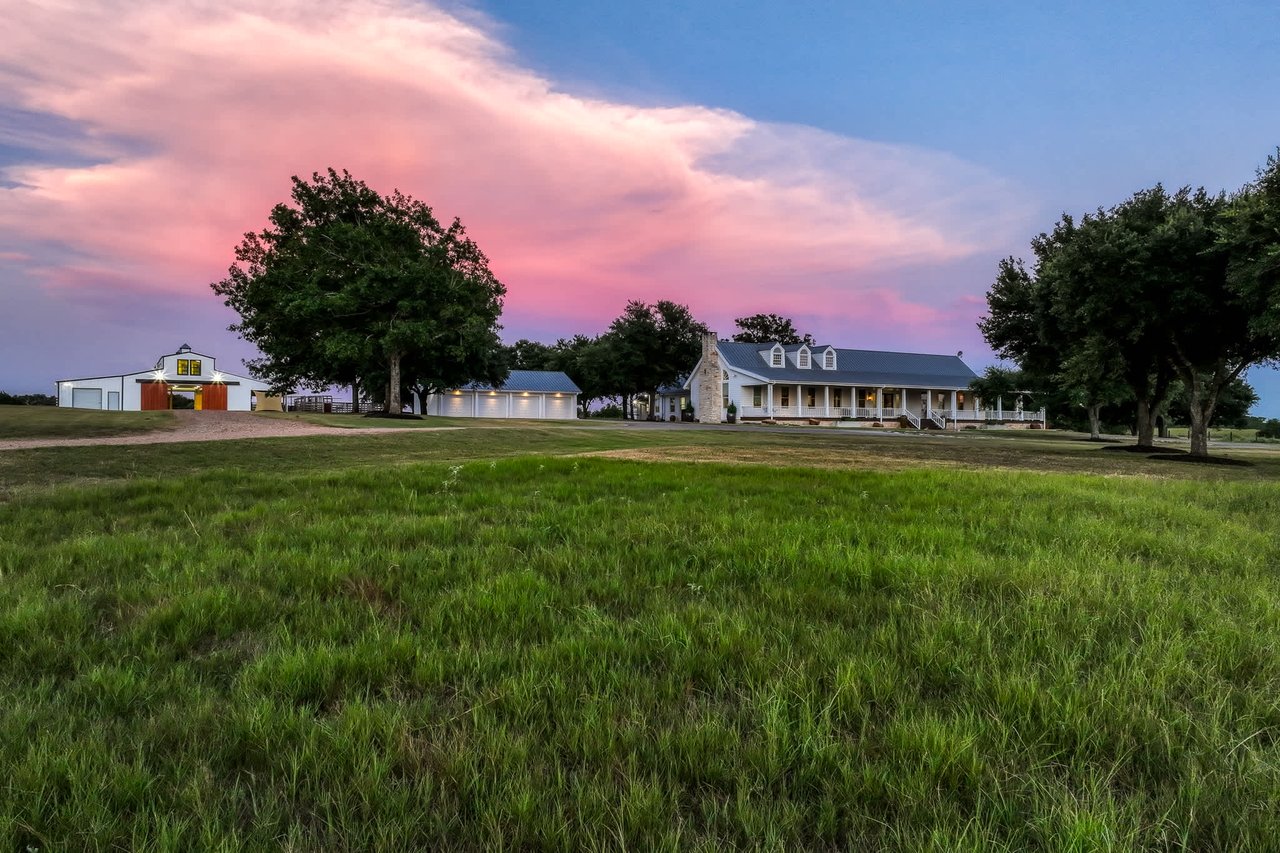
Nacogdoches County is the heart of this zone. As the oldest town in Texas, Nacogdoches has a genuine agricultural and livestock heritage, a state university (Stephen F. Austin), and an equestrian community that ranges from pleasure riders to small-scale breeders and barrel racers. Property here ranges from 10-acre hobby farms with simple barns to 200-acre timber and cattle operations with established horse infrastructure.
Angelina County (Lufkin) offers the zone's most commercial amenities and the best road infrastructure. Shelby County (Center) is among the most affordable equestrian markets in the state — buyers routinely find 50-plus-acre properties with functional horse infrastructure under $500,000. Houston County (Crockett) and Trinity County offer large timber and recreational properties for buyers prioritizing acreage and privacy over proximity to services.
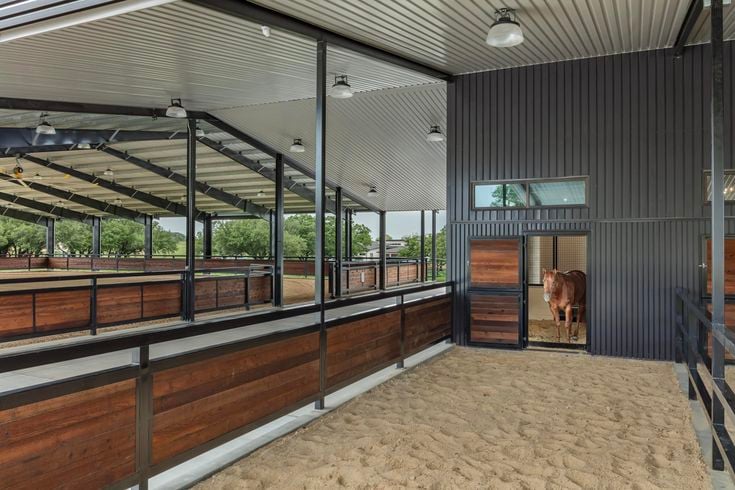
What to know: Deep East Texas receives 50 to 60 inches of rainfall annually — more than any other region covered here. That is good for pasture and natural water but creates real challenges for arena footing and drainage. Any covered arena or turnout area should be evaluated for drainage infrastructure before purchase. Red clay soil compacts heavily when wet and can make uncovered areas unusable for weeks after heavy rain. Properties with elevated building pads and engineered drainage are worth a premium.
Sam Rayburn Reservoir (Angelina County) and Toledo Bend (Sabine/Shelby counties) create lake-adjacent horse property opportunities that attract buyers from Houston and DFW seeking lifestyle properties combining equestrian use with lake access.
Counties: Hardin, Jefferson, Orange
Anchor cities: Beaumont (Jefferson County), Orange (Orange County), Silsbee (Hardin County)
Southeast Texas sits at the southern edge of the Piney Woods, where the pine forest meets the Gulf Coast prairie. Jefferson County (Beaumont) and Orange County are more urban and industrial — part of the Golden Triangle petrochemical corridor — and less relevant to most horse property buyers. Hardin County (Silsbee) is the exception: it retains genuine East Texas rural character, with timber operations, improved pasture, and equestrian properties that serve Houston-area buyers willing to drive for land.
The Big Thicket National Preserve covers parts of Hardin, Polk, and Tyler counties and offers additional trail riding access for properties near its boundaries.
What to know: Proximity to Houston is this zone's primary value driver. Buyers who work in the Houston or Beaumont metro areas and want to live on acreage with horses often land in Hardin County as a compromise between city access and rural character. Flood plain awareness is critical — this zone sits close to sea level and portions of all three counties carry significant flood risk.
This is the single most important factor in East Texas. Red clay soil retains water, compacts under horse traffic, and creates footing problems that are difficult and expensive to correct. Before making an offer, assess soil type across the entire property — not just near the home. Sandy loam upland soils are significantly better for horse keeping than bottomland clay. Any existing arena or turnout area should be evaluated for base material, footing depth, and drainage infrastructure.
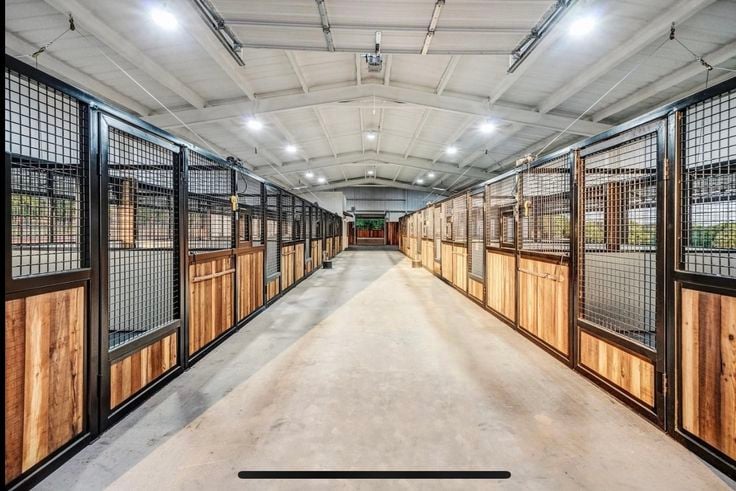
East Texas receives 50 to 60 inches of rain annually. Barns, arenas, and homes built on elevated pads with engineered drainage perform dramatically better than those built on flat sites. Look for properties where the main structures sit on higher ground with positive drainage away from horse-keeping areas.
With the Red River to the north and major reservoir systems throughout — Toledo Bend, Sam Rayburn, Lake Fork, Lake Tawakoni — many East Texas properties carry flood plain designations. An FEMA flood zone check is non-negotiable before making an offer, particularly on properties near creek drainages, river bottoms, or reservoir spillways.
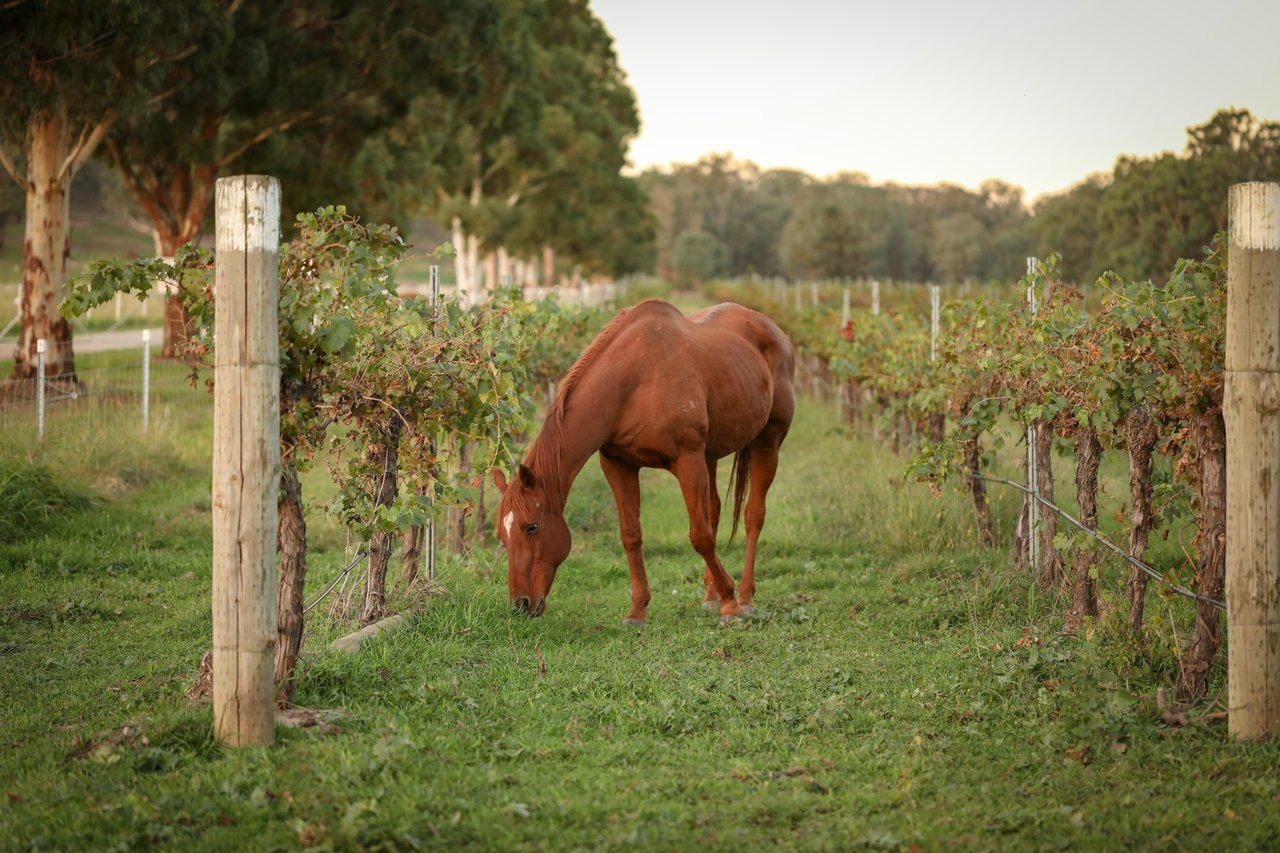
East Texas pastures are typically coastal Bermuda or native blends. Coastal Bermuda pastures that have been properly fertilized and managed can carry one horse per 1.5 acres. Neglected, weed-invaded, or shaded pastures carry far fewer horses and require significant investment to restore. Inspect closely — tall pines look beautiful but shade out grass, and many East Texas horse properties have less usable pasture than their acreage suggests.
Many East Texas properties have portions in managed pine timber. Timber on AG exemption can reduce property tax liability significantly, but clear-cut rotations and timber harvest schedules affect the aesthetics and usability of the property. Ask for the timber management plan and the harvest history before committing.
Unlike the aquifer-dependent West Texas and North Texas markets, East Texas has abundant surface water and relatively shallow, high-producing water table wells. Municipal water is often available even in rural areas. Confirm water source, well production rate if applicable, and the condition of any existing water infrastructure for livestock.
Properties that border or lie near the Sabine, Davy Crockett, Angelina, or Sam Houston National Forests have genuine added value for trail riding buyers. Verify access points and any easements or boundary agreements with the U.S. Forest Service.
Southeast Texas counties (Jefferson, Orange, Hardin) lie within the historical hurricane impact zone. Barn construction quality, roof anchoring, and insurance availability are considerations that do not apply in Central or North Texas horse property markets.
East Texas horse property buyers face a specific challenge: finding an agent who understands both the rural land and the horses. Most local agents in East Texas are residential or general rural agents — not equestrian specialists.
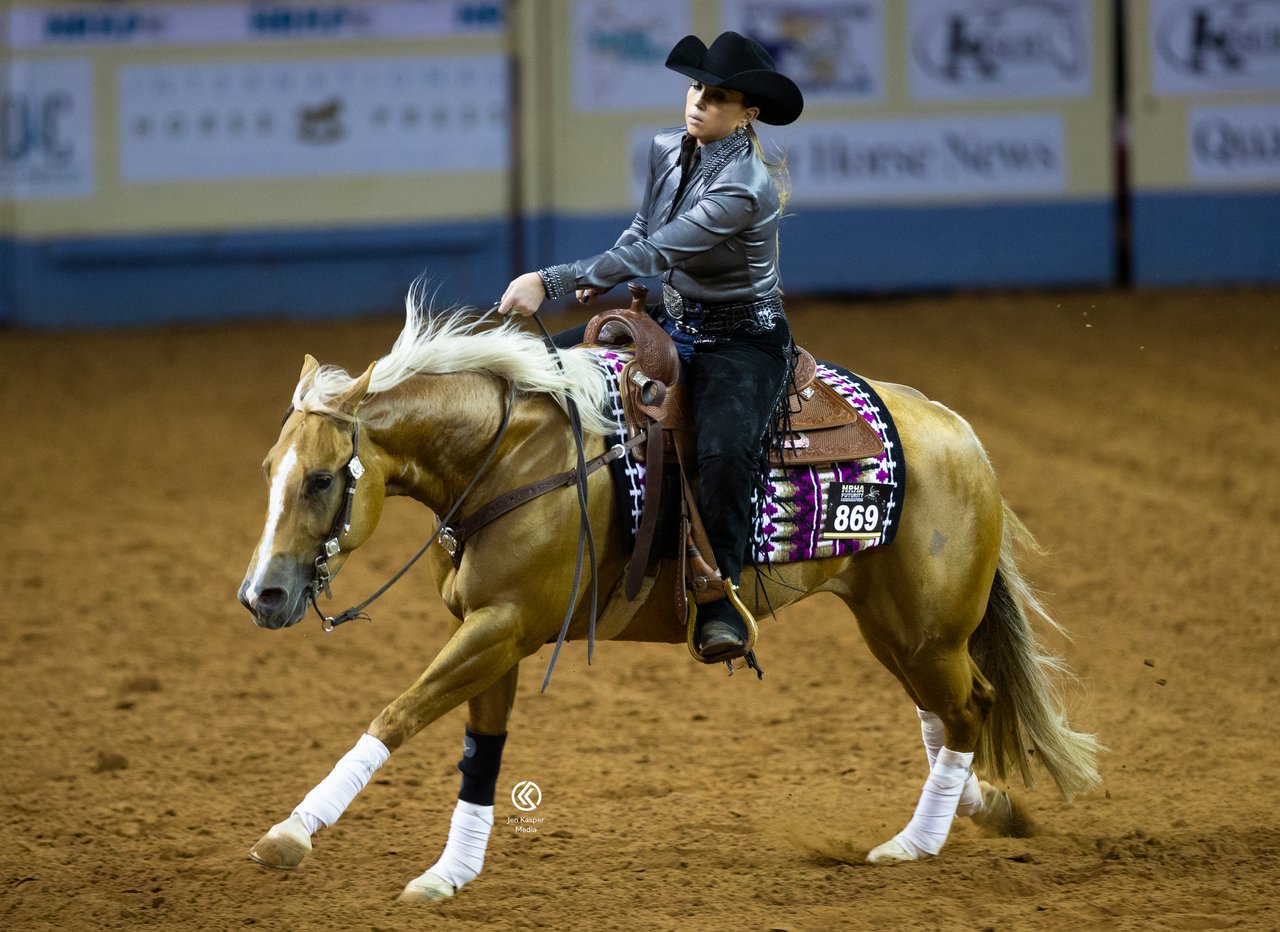
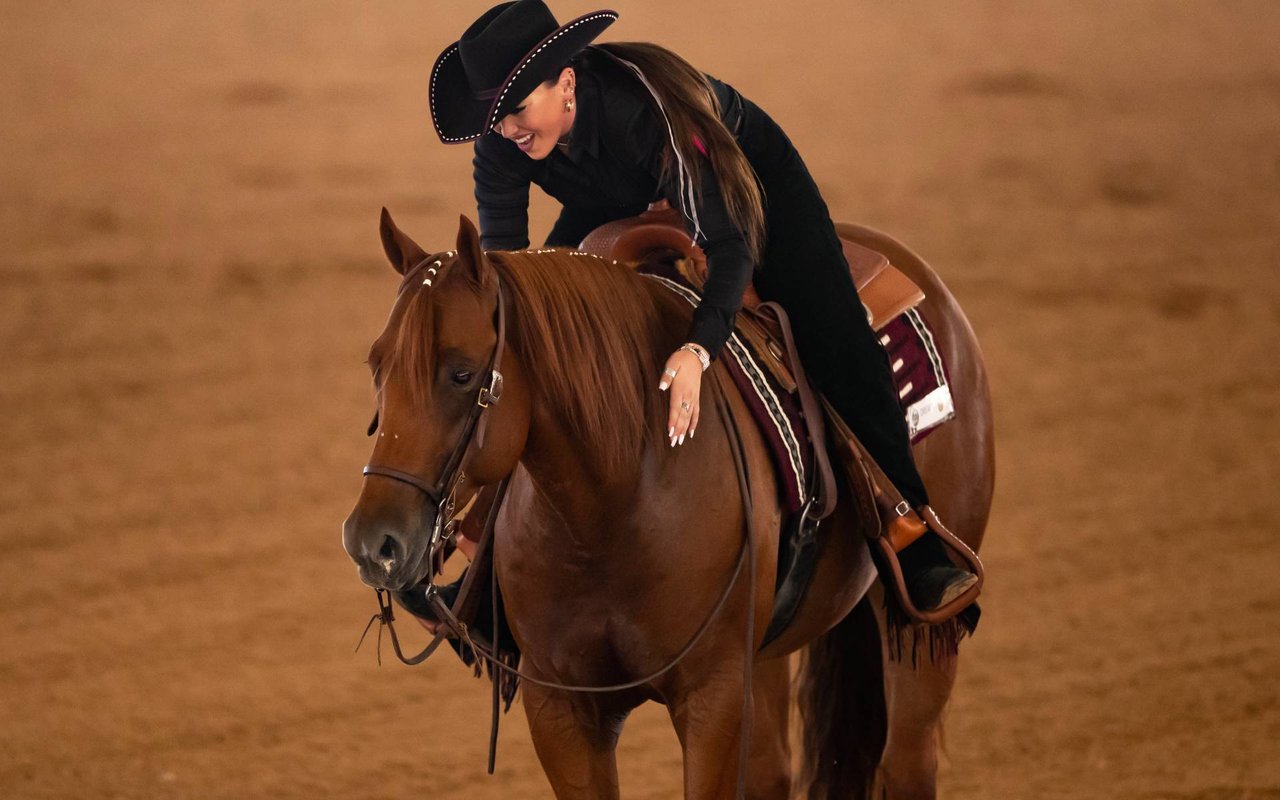
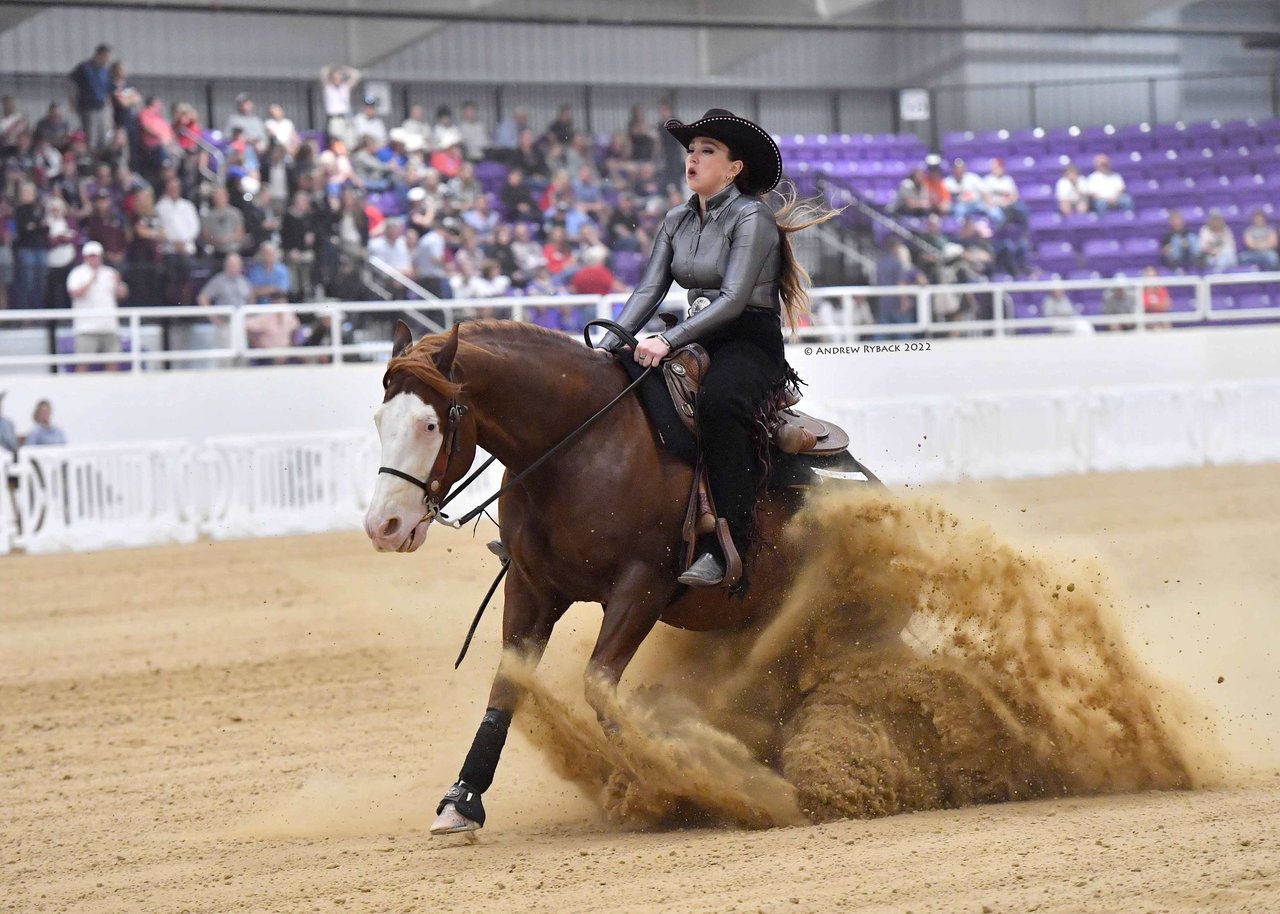
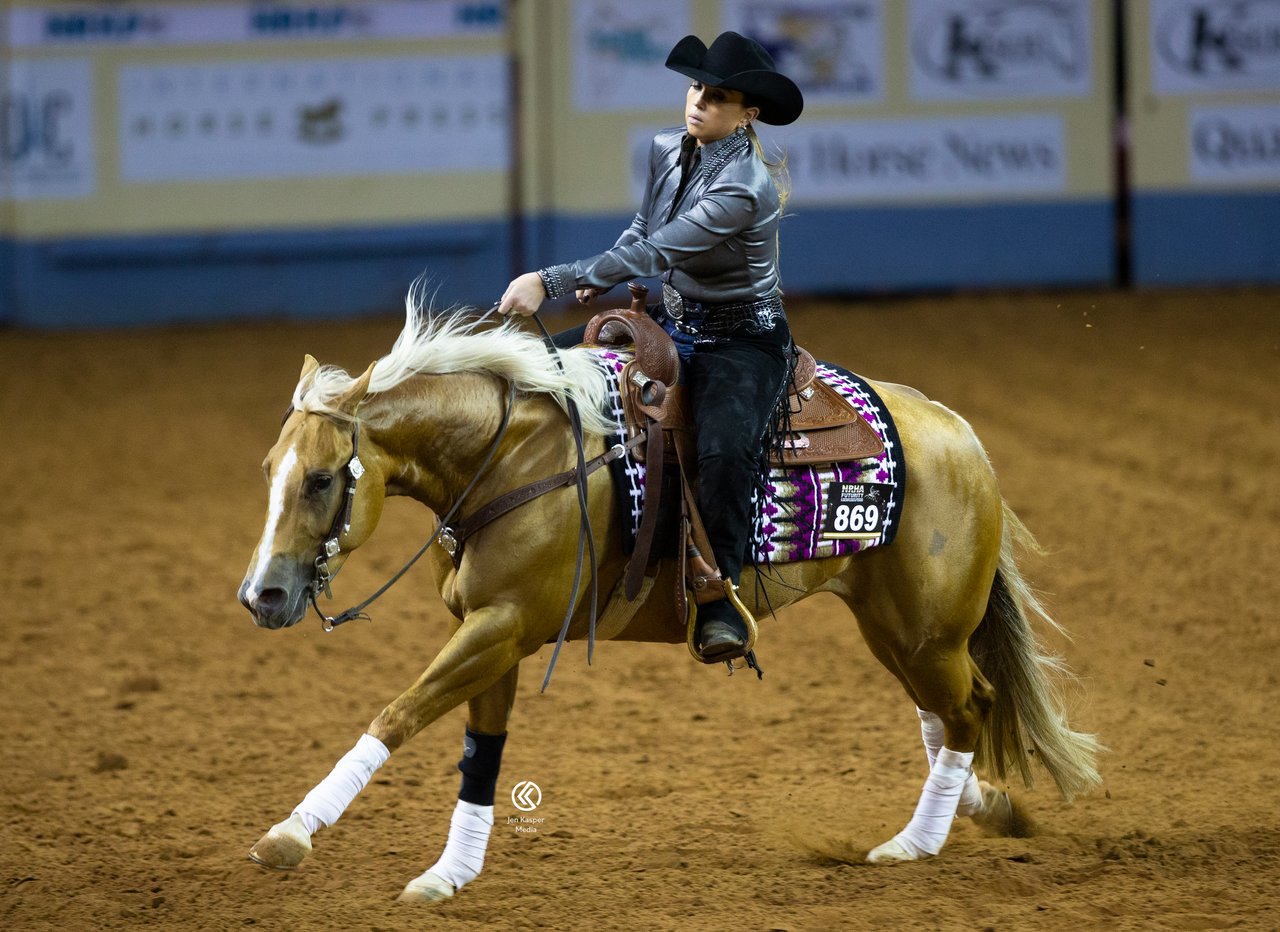
Lisa Bricker is a Certified Equestrian Property Specialist and Global Equestrian Advisor with Engel & Völkers Land and Ranch. She was raised on an equine ranch, competed nationally in reining (NRHA Novice World Champion, APHA Non-Pro Reining World Champion), and has 25+ years of hands-on experience in every corner of the Texas horse industry. That means she evaluates a horse property the way a horse owner evaluates it — drainage, soil, footing, water, pasture quality, and infrastructure — not just price per square foot.
As the host of ADTV Selling Texas: College Station, Lisa's listings reach a national audience through a streaming platform generating more than 100 million video views per quarter. For East Texas sellers, that means your property reaches buyers across Texas and beyond, not just those already searching local MLS feeds.
For East Texas buyers, that network means:
Off-market property access through a statewide equestrian network
Expert evaluation of Piney Woods-specific factors — drainage, soil, timber, flood plain — before you commit
A buyer's advocate who knows what a horse property actually needs to function, not just how it photographs
Connections to equestrian appraisers, agricultural lenders, and land professionals who understand East Texas rural real estate
East Texas moves at a different pace than the rest of the state — and that is exactly what many buyers are looking for. Acreage is more accessible, competition is lower, and the land itself offers something that North and Central Texas cannot: a forested, water-rich, trail-riding lifestyle that is quietly becoming one of the most sought-after equestrian settings in Texas.