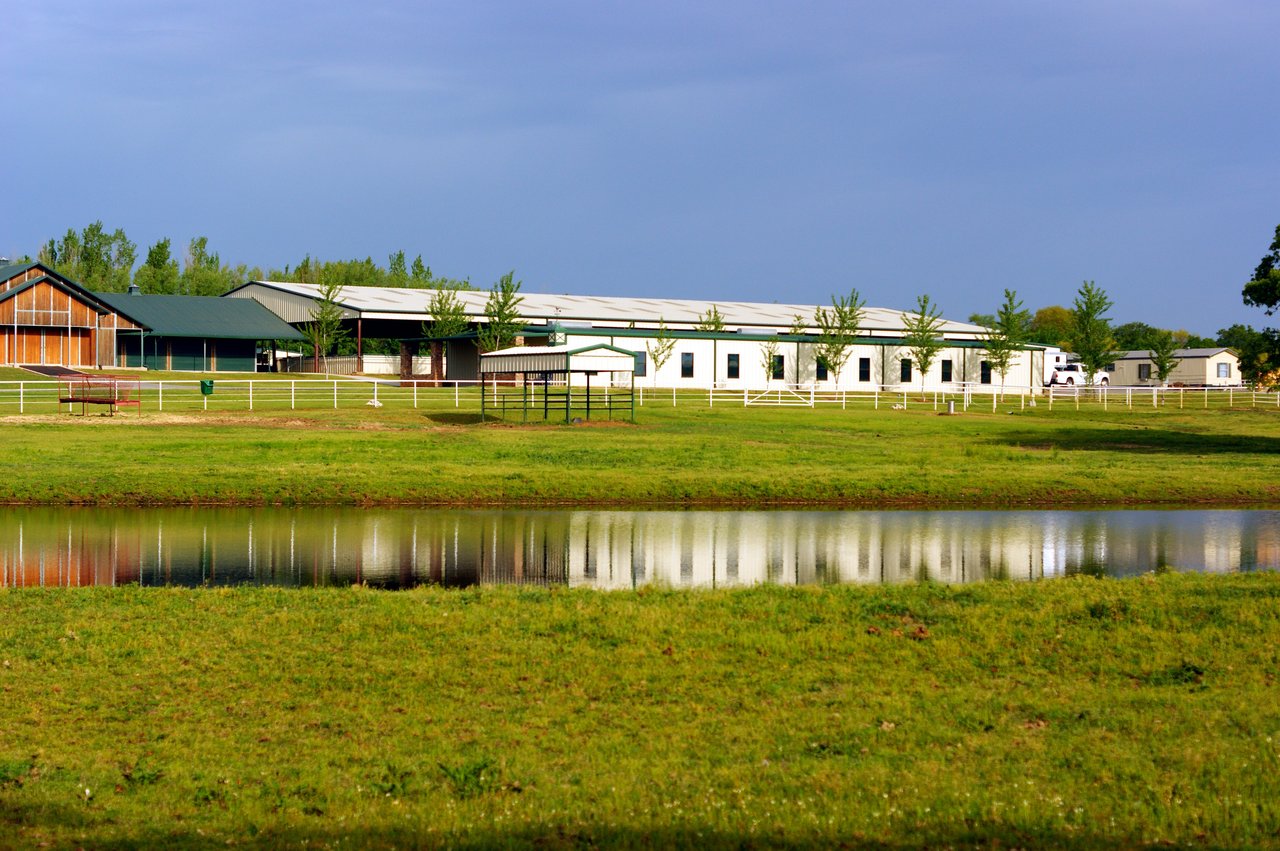
Find the Right Texas Equestrian Property for Your Horses
Not all horse properties are the same. A reining horse trainer needs a 300-foot covered arena with deep footing and 30 stalls. A barrel racer needs a long straight run-in and consistent pattern ground. An English rider needs different footing, different fencing, and often a different kind of community than the cutting horse world. A breeder needs a stallion facility, AI lab, and foaling stalls — not a training arena. A buyer looking for a luxury equestrian estate needs a residential product that happens to have a barn, not a commercial facility that happens to have a house.
The mistake most buyers make is searching for a "horse property" as if it were a single category. It is not. Getting the right facility for your horses' job description — and your life outside the barn — is what separates a good purchase from a decade of expensive compromises.
As a Certified Equestrian Property Specialist, Global Equestrian Advisor, and lifelong competitor in the Texas reining and performance horse world, Lisa Bricker works with buyers and sellers across every category of Texas equestrian property: from turnkey reining facilities in Parker County to luxury equestrian estates in Washington County, from barrel horse training operations in the Waller County corridor to suburban horse-zoned hobby farms in Denton County. Use this page to understand the landscape — then start the conversation.
Performance Horse Training Facilities
Performance horse training facilities are purpose-built commercial or semi-commercial operations designed to support active training programs. The infrastructure is the primary value driver: arena quality, barn configuration, and the ability to run multiple horses efficiently are what buyers pay for. If you are buying or selling in this category, the residential component is secondary.
Premier Reining Horse Facilities and Ranches
Reining is a precision western discipline requiring consistent, deep arena footing and large arena dimensions — typically 100 feet wide by 200 to 300 feet long at minimum for a competitive facility, often larger for pattern work with multiple horses. Premier reining facilities are concentrated in Parker County (Weatherford), Denton County (Pilot Point, Aubrey), and the surrounding North Texas cross-timbers counties where sandy loam soil supports quality arena construction and the training community is most dense.
What defines a premier reining facility:
- Covered arena of 100×200 feet minimum, 100×300 preferred, with engineered base, quality footing (silica sand or sport sand blend), and proper roof pitch for ventilation
- Shedrow, MD Barn, or raised-center barn with 20 to 60-plus stalls depending on program size
- Separate turnout paddocks fenced appropriately for horses in training
- Hot walker, round pen, and breeding/teasing facilities if applicable
- Wash rack, tack room, and feed room with feed security
- Trainer's quarters or separate employee housing on larger operations
- Main residence with views of the facility (preferred by buyers who also live on-property)
- Reliable water supply — high-volume wells or municipal connection — to support high horse counts
Where to look: Parker County for the highest-density reining community and the proximity to elite trainers, clinics, and NRHA-affiliated events. Denton County (Pilot Point, Aubrey) for AQHA proximity and access to the DFW metro buyer pool. Wise County (Decatur, Sunset) and Erath County (Stephenville) for larger facilities at more accessible price points.
Barrel Horse Training Facilities
The barrel horse market is one of the most active segments of the Texas equestrian property world. Barrel racing's growth as a competitive discipline — and the NFR and major rodeo money at stake — has driven demand for purpose-built barrel training facilities well beyond the traditional rodeo community.
What defines a barrel horse training facility:
- Large covered or uncovered arena (minimum 150×300 feet for competitive pattern work; serious facilities run 200×400 or larger)
- Long, straight run-in approach before the first barrel — often 60 to 90 feet from the start line to the first barrel
- Consistent footing that can handle speed work without becoming deep or slick — silica sand blends or GGT footing are common
- Multiple stalls for a string of horses in various stages of conditioning and training
- Turnout paddocks for horses on conditioning programs
- Livestock trailer parking and staging area sized for frequent haul-ins
- Ideally: a separate conditioning track or open ground for fitness work
Where to look: Waller County (Hempstead corridor) has one of the most active barrel racing communities in Texas, with good sandy loam soil for footing and strong proximity to the Houston livestock show circuit. Montgomery County (Magnolia, Plantersville) also has a robust barrel racing community. North Texas barrel facilities concentrate around Erath, Wise, and Hood counties.
Premier Cutting Horse Ranches
The cutting horse world is centered in Parker County, Texas — and Weatherford's reputation as the cutting horse capital of the world is not marketing language. The National Cutting Horse Association (NCHA) offices are in Dallas, the major cutting events anchor the Fort Worth and DFW show calendar, and the concentration of elite trainers and commercial breeding programs in the Weatherford corridor is unmatched anywhere on earth.
What defines a premier cutting horse ranch:
- Large covered arena (100×200 minimum; competition cutting arenas are typically 100×200 with deep sandy footing that allows cattle and horses to work fluidly)
- Cattle pens: cutting horses train on cattle, so working pens, sorting alleys, and cattle holding facilities are essential infrastructure
- High stall counts — cutting facilities often run 30 to 80 stalls for training programs
- Cattle-proof perimeter fencing throughout the property (no gaps between horse and cattle zones)
- Separate cattle pasture with water and shade infrastructure
- Feed storage sized for both horses and cattle
- NCHA-approved competition ground if used for events: specific footing specifications, judge's stand, cattle return alleys, spectator areas
Where to look: Parker County is the first call for any serious cutting horse buyer. Properties in the Weatherford, Millsap, and Weatherford west corridor trade at premium prices reflecting their proximity to the world's most competitive cutting horse community. Hood County (Granbury) and Erath County (Stephenville) offer cutting-capable facilities at lower price points with longer hauls to the top trainers.
English Training Facilities
Dressage, hunter/jumper, and eventing properties represent a smaller but growing segment of the Texas equestrian market. English discipline buyers have infrastructure needs that differ materially from the western performance horse world, and finding an agent who understands those differences is more difficult in Texas than in Virginia, Kentucky, or California.
What defines an English training facility:
- Outdoor arena with proper footing for dressage (typically 20×60 meters) or hunter/jumper (large enough for course work, typically 100×200 feet or larger)
- Indoor arena in more northern Texas locations where weather interrupts winter training
- Bank jump fields or natural terrain courses for eventing properties
- Grass jump fields for hunter/jumper operations
- European or Kentucky-style barn construction: center-aisle stall barns with 12×12 or larger stalls, high ceilings, excellent ventilation
- Tack room, wash rack, and equipment storage designed for English discipline use (saddle racks, blanket storage, boot racks)
- Grass paddocks or turnout with appropriate fencing (board fencing or Centaur/PVC common in English facilities; no high-tensile wire)
Where to look: The English equestrian market in Texas concentrates in the Austin Hill Country and Capital Area counties (Travis, Hays, Blanco, Burnet), upscale DFW suburbs (Collin County, southern Denton County), and the Upper Gulf Coast near Houston. Washington County (Brenham, Round Top) has attracted English discipline buyers from Houston seeking luxury equestrian estates with curated aesthetics.
Commercial and Working Operations
Breeding Operations
Texas breeding operations range from small private operations focused on a single stallion and a small broodmare band to large-scale commercial programs managing dozens of mares and multiple stallions. The infrastructure requirements for a breeding operation are distinct from training facilities and are rarely served well by properties designed for the performance horse market.
What defines a breeding operation:
- Stallion facility: segregated barn or paddock system that prevents stallion-to-mare contact except during controlled breeding; secure, high-fencing stallion paddocks (minimum 6 feet, often 8 feet)
- Breeding shed: covered, padded area for live cover with kick walls and adequate size for safe mare and stallion handling
- AI laboratory: refrigeration, centrifuge, microscope, extender supplies, and sanitary work surfaces for semen collection and processing; increasingly essential even for live cover farms
- Foaling stalls: larger than standard (14×14 or 16×16 minimum), often equipped with camera monitoring systems and foaling alarm systems
- Broodmare pastures: large enough to allow mares to move freely; good grass, reliable water, appropriate shade
- Weanling and yearling handling facilities: smaller pens with safe fencing appropriate for young horses learning to lead and handle
- Veterinary room: a dedicated space with stocks, good lighting, and utility connections for reproductive veterinary work (ultrasound, catheters, prostaglandin and hormone protocols)
Where to look: The Brazos Valley (Brazos, Washington, Grimes, Madison counties) has a strong Quarter Horse and paint horse breeding community connected to the Texas A&M equine science program and the College of Veterinary Medicine. Wilbarger County (Vernon) and the Nortex region carry deep Quarter Horse breeding heritage. Parker County supports the cutting horse breeding world.
Horse Farms and Open Pasture Land
Not every buyer needs an existing arena and barn. Many of the best horse property purchases in Texas start as raw or improved pasture land — good soil, reliable water, appropriate acreage — and the buyer builds the facility they want rather than inheriting someone else's compromises.
What a horse farm buyer looks for in open land:
- Soil type: sandy loam is the gold standard for horse keeping; post oak sandy loam (common in Brazos Valley, Cross Timbers, and East Texas uplands) drains well and supports both pasture and arena construction
- Carrying capacity: 1.5 to 2 acres per horse on improved coastal Bermuda; 2 to 5 acres per horse on native pasture depending on rainfall
- Reliable water: a well producing 10+ gallons per minute, or municipal access; do not rely solely on pond or surface water for primary horse water
- AG exemption eligibility: 10 acres minimum in most Texas counties; horses qualify as agricultural use in many counties with proper documentation
- Perimeter fencing: existing perimeter fence in good condition represents significant value — new perimeter fencing on 20-plus-acre properties is expensive
- Building site: a natural elevated pad or buildable site away from flood plain for arena and barn placement
- Utilities: electric service to the property boundary; well vs. municipal water availability
Where to look: Washington County and Fayette County offer some of the best-improved pasture in Central Texas. Waller County's sandy loam uplands are consistently sought for their arena and pasture performance. Leon, Robertson, and Madison counties in the Brazos Valley offer large acreage at accessible prices.
Turnkey Horse Ranches
The most sought-after category in the Texas equestrian property market is also the most competitive: a fully operational, move-in-ready horse ranch where every system works, the infrastructure is built correctly, and the buyer can arrive with horses and never stop. Turnkey horse ranches command significant premiums over comparable properties that need work, and for good reason — the cost and time required to build correct equestrian infrastructure from scratch is enormous.
What makes a ranch genuinely turnkey:
- A covered arena with engineered base and quality footing that does not require remediation
- A barn with stalls in serviceable condition: no rot in wood structures, no compromised roofing, no drainage problems in stall floors
- Pastures that are established, fenced, and carrying appropriate grass cover (not overgrazed bare ground)
- Water infrastructure: working wells or municipal connections with adequate pressure, functional automatic waterers or reliable manual water delivery systems
- Road and driveway surfaces adequate for livestock trailer access without tearing up in wet weather
- Working electrical systems throughout: lighting in barn, arena, and outdoor areas
- A residence that does not require immediate renovation investment to be habitable
Where to look: Turnkey horse ranches in Parker, Denton, and Washington counties represent the top of the market. Central Texas and Upper Gulf Coast (Waller, Austin County) consistently produce the best turnkey product in the mid-market ($500K to $2M) range. The Brazos Valley offers turnkey working operations at price points the DFW belt cannot match.
Lifestyle and Residential Properties
Luxury Equestrian Estates
Luxury equestrian estates are residential products first and horse properties second — but the horse infrastructure is what justifies and defines the investment. These are architect-designed homes on curated acreage where the barn, arena, paddocks, and landscaping are integrated into the overall design vision. The buyer is typically a high-net-worth individual or family for whom horses are central to their lifestyle but the residential quality is non-negotiable.
What defines a luxury equestrian estate:
- Custom-built primary residence of 3,000 to 10,000+ square feet with high-spec finishes, professional kitchen, and primary suite positioned to view the equestrian facility
- Professionally designed and constructed barn — often European-style center aisle with custom woodwork, premium stall hardware, climate control in tack room, in-floor drainage, and architectural consistency with the residence
- Arena designed and built to match: covered or outdoor with curated fencing, quality footing, stadium lighting if appropriate
- Irrigated pastures, cross-fenced paddock systems with premium fencing (board, vinyl-wrapped board, or custom metal fencing), professional landscaping throughout
- Guest house, caretaker's quarters, or separate manager's residence in larger properties
- Swimming pool, outdoor entertaining areas, and landscaping designed as a visual whole with the equestrian facility
Where to look: Collin County (Prosper, Celina) and southern Denton County lead the DFW luxury equestrian market. Washington County (Brenham, Round Top, Chappell Hill) is the Central Texas luxury hub for buyers from Houston and Austin. The Hill Country counties (Llano, Blanco, Burnet) deliver luxury equestrian estates with the limestone-and-live-oak aesthetic that brings buyers from across the country.
Suburban Equestrian Properties
Suburban equestrian properties are the entry point for the largest segment of Texas horse property buyers: owners of one to six horses who want to live with their animals on 5 to 25 acres within reasonable commuting range of a major metro. This is a practical purchase driven by lifestyle priorities rather than competition or commercial operation.
The challenges in this segment are real: suburban land near major Texas metros is expensive per acre, AG exemption access varies by county and minimum acreage, and the pressure of suburban development means the horse-friendly character of a given area can change within a 10-year ownership horizon.
What a suburban equestrian buyer looks for:
- 5 to 25 acres within 30 to 60 minutes of the employer or school district anchor
- Zoning or deed restriction compatibility with horse keeping (critical to verify before offer)
- A serviceable existing barn, even if not perfect — building new is expensive
- Some form of turnout or pasture, even if modest
- A home that does not require complete renovation — buyers in this category are often stretched by land cost and need a habitable residence from day one
- Commute corridor access via major highway rather than rural county roads
Where to look: The northwest Houston suburbs (Waller County near Brookshire, Hempstead, and Katy) deliver the best combination of proximity to Houston and horse-keeping feasibility at accessible price points. Montgomery County (Magnolia, Tomball area) and western Fort Bend County (Fulshear, Simonton) serve the same function. In North Texas, Wise County (Decatur), southern Denton County, and the outer Ellis and Johnson county corridors provide suburban equestrian options at prices below the Parker County premium.
Equestrian-Zoned and Horse-Friendly Communities
A small but growing category of Texas equestrian real estate consists of planned communities specifically designed for horse owners — deed-restricted neighborhoods with equestrian easements, shared trail systems, manure management rules built into the HOA, and properties configured for horse keeping from the ground up. These communities solve the suburban equestrian buyer's biggest challenge: eliminating the risk that a neighbor will eventually object to horses.
Examples in Texas include established equestrian communities in Denton, Montgomery, and Cooke counties, as well as newer planned equestrian developments emerging in the outer suburbs of Austin and San Antonio. These properties vary widely in quality and in the quality of the shared equestrian infrastructure.
What to verify in a planned equestrian community:
- The HOA's actual rules for horse keeping: permitted species, stall density, manure disposal requirements, noise and lighting standards
- The condition and maintenance funding for shared trail systems and common equestrian areas
- Whether the community has ever experienced disputes between horse-keeping and non-horse-keeping residents, and how those were resolved
- Minimum acreage per horse required by deed restriction — some communities are effectively too small for the horse count the buyer intends
- Resale restrictions and HOA approval requirements for new buyers
What to Ask About Any Texas Equestrian Property
Regardless of property type, these questions should anchor any Texas equestrian property due diligence process.
Is the infrastructure built correctly, or is it built cheaply? Arena bases, barn footings, and stall drainage are expensive to correct after purchase. An inspection by someone who has built these structures — not a general home inspector — is essential on any equestrian property purchase above $300,000.
Does the facility match the horses' job? A reining horse training facility with 30 stalls and a 100×300 arena is not the right fit for a family with two trail horses. A 10-acre hobby farm is not the right fit for a professional cutting horse trainer with a string of 20 horses. Be honest about your horse count, your discipline, and your operational requirements before you fall in love with a property.
What is the water story? Texas is a dry state with unpredictable rainfall. Confirm well production rate, water quality testing, and backup water access before closing on any rural equestrian property. High horse counts require significant daily water volumes; inadequate water infrastructure is a fundamental property flaw.
What does AG exemption look like? Verify current status, qualification basis, and rollback tax liability. In high-value suburban counties, losing an AG exemption can add tens of thousands of dollars annually in property taxes.
What will it cost to operate? The purchase price is only part of the total cost of ownership. Estimate annual operating costs: hay, feed, farrier, veterinary, utility bills (arena lighting, well pump, barn electricity), property taxes with and without AG exemption, and any deferred maintenance on existing structures. Know your monthly carrying cost before you close.
Why Work With Lisa Bricker Across All Property Types
Most real estate agents know one corner of the equestrian property market. A residential agent near Weatherford knows the local market but may not understand an AI laboratory's design requirements. A ranch agent in the Brazos Valley understands land but may never have evaluated a covered arena for competition-level footing. A luxury agent in Collin County understands finishes and design but may not know what a barrel horse actually needs to train.
Lisa Bricker is a Certified Equestrian Property Specialist and Global Equestrian Advisor who has spent 25+ years in the Texas horse industry across disciplines, facilities, and property types. She competed nationally in reining (NRHA Novice World Champion, APHA Non-Pro Reining World Champion), was raised on an equine ranch where her father operated a reining horse training business, and has personally evaluated turnkey training facilities, luxury estates, breeding operations, raw land, and suburban hobby farms across Central Texas, North Texas, East Texas, and the Upper Gulf Coast.
As host of ADTV Selling Texas: College Station — generating 100 million+ video views per quarter — and through the Engel & Völkers Land and Ranch global network, Lisa brings national marketing reach to every listing category. The buyer for your premier cutting horse ranch may be based in California. The buyer for your luxury equestrian estate may be in New York. Those buyers are not browsing Zillow.
Ready to Find Your Texas Equestrian Property?
Tell Lisa what your horses do, how many you have, what your current facility is missing, and where in Texas your life is anchored — and she will match you to the property type, the region, and the specific inventory that fits. No generic search results. No wasted tours on facilities that look right in photographs but fail the first time a horse moves in.
Call or text Lisa Bricker at (979) 446-5340, email [email protected], or fill out the contact form on this page. The conversation is free. The search starts today.