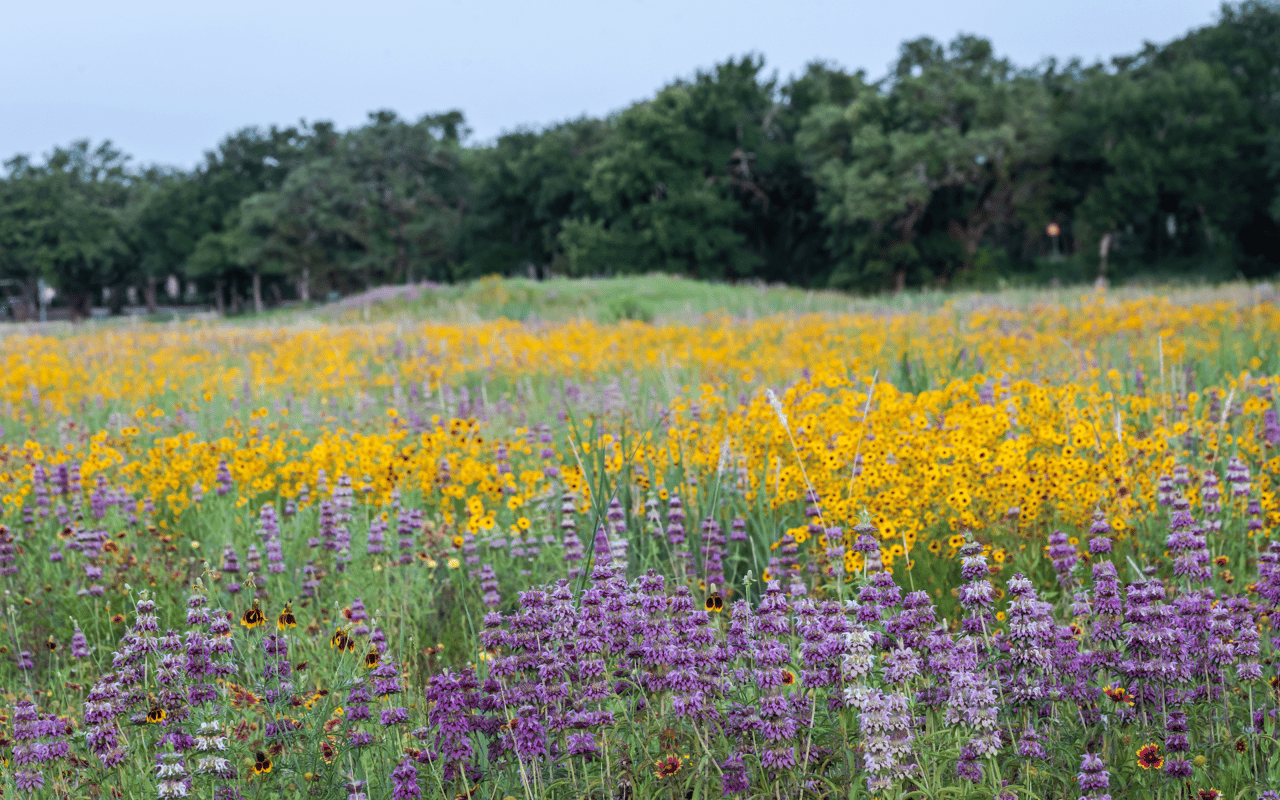
In a world of volatile stock markets, fluctuating interest rates, and economic uncertainty, one asset class has quietly delivered consistent, long-term returns for Texas landowners: rural land.
Not farmland futures. Not a real estate investment trust. Actual dirt — acres of it — with grass, timber, water, and sky. Texas rural land has long been one of the most stable, tangible investments available, and the fundamentals driving its value aren't going away anytime soon. If anything, they're accelerating.
Here's why serious investors, legacy-minded families, and first-time rural buyers are all looking at Texas land differently in 2026 — and why that trend is likely to continue for decades.
The Core Equation: Limited Supply Meets Relentless Demand
Texas is big. That's never been in question. But here's what most people don't fully appreciate: the supply of quality rural land in Texas is finite and shrinking.
As Texas continues to lead the nation in population growth — adding hundreds of thousands of new residents every year — the urban footprint of cities like Austin, San Antonio, Dallas-Fort Worth, and Houston expands outward, steadily consuming the rural acreage that once surrounded them. Land that was agricultural ten years ago is now a subdivision. Ranch land that felt remote in 2015 is now within 30 minutes of a major employment center.
This is not a temporary phenomenon. It is a long-term, structural shift — and it means that quality rural land, especially within two to three hours of a major Texas city, becomes harder to replace with each passing year.
The Texas Real Estate Research Center has tracked this dynamic consistently: rural land prices across the state have trended upward across nearly every region over the past decade, even when broader real estate markets softened. The statewide median price per acre for large rural tracts recently reached $4,827 — a 2.7% year-over-year increase — with West Texas leading appreciation at nearly 13% year-over-year.
When supply is constrained and demand keeps growing, prices move in one direction over time.
Land You Can't Make More Of
Warren Buffett famously said: "Buy land — they're not making it anymore." That principle holds nowhere more clearly than in rural Texas.
Unlike residential construction, where developers can build more units to meet demand, rural acreage has a hard ceiling. Large ranches that are subdivided into smaller tracts disappear from the market permanently. Legacy properties that have been in a family for generations rarely return when they sell. The cattle ranch that fronts a creek, the Hill Country spread with live water, the East Texas timber tract with a stocked lake — once those trade hands and get developed, they're gone.
Smart buyers understand that they are not just purchasing a piece of property. They are securing a position in a shrinking inventory of a genuinely irreplaceable asset.
Legacy Ownership: More Than an Investment
For many Texas rural landowners, the motivation to buy isn't purely financial. It's generational.
Land ownership creates something that a brokerage account cannot: a place. A family home base. A destination that anchors holidays, weekends, and the rhythms of life for generations. Children grow up learning to work cattle, ride horses, manage wildlife, and understand the land. That connection — to place, to nature, to family history — is the kind of wealth that doesn't appear on a balance sheet but is deeply felt.
Legacy landowners in Texas often speak about their property not in terms of return on investment but in terms of stewardship. They are not just owners — they are caretakers of land they intend to pass down.
This mindset also has practical implications. Legacy buyers tend to hold land longer, which allows appreciation to compound and reduces transaction costs over time. They invest in improvements — fencing, water infrastructure, wildlife management, hunting programs — that increase both the productivity and the market value of the property. And because they're not looking for a quick exit, they weather short-term market fluctuations with patience that purely financial investors sometimes lack.
If leaving something meaningful to the next generation is part of your vision, Texas rural land is one of the few assets that can deliver on that promise in a tangible, lasting way.
Portfolio Diversification: The Case for a Tangible Asset
For investors who already hold stocks, bonds, and real estate, rural land offers something distinct: an asset that doesn't correlate with Wall Street.
When equity markets dropped sharply in 2020, 2022, and during various economic shocks over the past decade, Texas rural land prices held — and in many regions continued to appreciate. Land doesn't have earnings reports, quarterly volatility, or executive scandals. It doesn't get delisted. It doesn't go to zero.
Investment-grade rural land in Texas offers several characteristics that complement a traditional portfolio:
Inflation hedging. Land is a hard asset. As the cost of everything rises, so does the cost of land — making it one of the most reliable long-term hedges against inflation. A dollar invested in Texas acreage ten years ago has generally held its purchasing power far better than cash sitting in a savings account.
Intrinsic productive value. Unlike gold or certain financial instruments, land can generate income while you hold it. Agricultural leasing, hunting leases, timber harvesting, carbon credits, and agritourism are all legitimate revenue streams available to Texas rural landowners. Your asset works for you even when you're not on it.
Capital preservation. For high-net-worth buyers looking to protect generational wealth, land offers stability that financial assets rarely match over a 20–30 year horizon. It cannot be hacked, inflated away, or dissolved in a corporate bankruptcy.
Low correlation to equities. Because rural land markets are driven by local supply and demand — not by Federal Reserve press releases or earnings season — a land position can provide ballast in a portfolio when financial markets become turbulent.
Buyer data from the Texas ranch market reflects this thesis: 42% of rural land buyers are now all-cash purchasers, and 27% are using 1031 exchanges to roll appreciated real estate equity into land holdings. These are not impulsive buyers. They are deliberate investors making calculated portfolio decisions.
The Agricultural Tax Exemption: A Game-Changer for Land Ownership
One of the most powerful and least-understood financial advantages of owning rural land in Texas is the agricultural exemption — and it's one of the primary reasons the state's land market attracts buyers from across the country.
Texas has no state income tax. But it does have property taxes — and without an exemption, the carrying cost of rural acreage can be significant. The agricultural exemption changes that equation entirely.
What it is: When land is actively used for agricultural purposes — cattle grazing, hay production, wildlife management, timber, farming, or beekeeping — it can qualify for a special tax appraisal based on its agricultural productivity value rather than its market value. In most Texas counties, this reduces the taxable value of rural land by 70–90% or more.
What that means in dollars: A 100-acre tract appraised at $500,000 in market value might carry a property tax bill of $12,500 or more at standard rates. With an ag exemption in place, that same property might be taxed on a productivity value of $50,000 — reducing the annual tax bill to $1,250 or less. That's real money, every year, for as long as you hold the property.
Wildlife management as an ag use: One of the most popular and flexible paths to maintaining an ag exemption is a wildlife management plan. Properties that support native wildlife through habitat management, supplemental feeding, census counts, and water sources can qualify under this category — even without traditional livestock operations. This is particularly popular with recreational buyers who aren't running cattle but want to maintain the exemption while improving their property for hunting and wildlife observation.
Beekeeping: Texas has also recognized beekeeping as a qualifying agricultural use, opening the exemption to smaller tracts that might not support a traditional cattle or hay operation. Beekeeping requires a minimum number of hives per acre (which varies by county and tract size) and documentation of active management.
Important note: If you purchase land with an existing ag exemption, you are responsible for continuing a qualifying agricultural use. If the land loses its exemption — or if you change its use — there can be rollback taxes assessed for up to five prior years. Understanding the exemption requirements before you buy, and having a plan to maintain qualifying use, is an essential part of rural land due diligence.
The Recreational Value Premium
Beyond pure investment merit, Texas rural land increasingly commands a premium for what it offers that no financial instrument ever can: the experience of owning it.
Hunting, fishing, trail riding, camping, birdwatching, stargazing — these are not incidental to rural land ownership. They are part of the return. Buyers who purchase land for recreational use report some of the highest levels of satisfaction in any real estate category, and that personal value reinforces their willingness to hold through market cycles and invest in improvements.
Recreational demand is also a market driver. Properties with white-tailed deer habitat, live water, established food plots, and wildlife management programs consistently command 10–20% premiums over comparable raw acreage. The investment you make in improving your land's recreational quality is not lost — it's captured in market value when the time eventually comes to sell.
Who Is Buying Texas Rural Land Right Now?
The Texas rural land market in 2026 reflects a broad and motivated buyer pool:
- Cash buyers (42%) who prioritize capital preservation and income potential over leverage
- 1031 exchange investors (27%) rolling equity from appreciated commercial or residential real estate into land
- Recreational buyers (19%) seeking lifestyle assets with genuine investment value
- Agricultural operators (12%) expanding working ranches or farm ground
The diversity of this buyer pool is itself a sign of strength. Texas rural land is not a niche product for a single type of buyer. It appeals across income levels, investment philosophies, and lifestyle goals — which creates sustained, resilient demand regardless of what any single buyer segment does.
The Bottom Line
Texas rural land has delivered consistent, long-term value not because of speculation or market hype, but because of something far more durable: it is genuinely scarce, organically productive, financially advantaged, and irreplaceable.
The combination of limited supply, relentless population growth, meaningful tax advantages, and the enduring human desire to own land creates a value proposition that holds across economic cycles, generations, and investment strategies.
Whether you're thinking about diversifying a financial portfolio, establishing a family legacy, reducing your tax burden through an ag exemption, or simply putting down roots in a place that means something — Texas rural land is worth a serious look.
I work with buyers across Texas who are navigating exactly these decisions. If you'd like to talk through what a rural land investment might look like for your specific situation, I'd love to start that conversation.
The information in this post is intended for general educational purposes and does not constitute tax or legal advice. Always consult a qualified tax professional or attorney regarding agricultural exemptions and investment decisions specific to your situation.