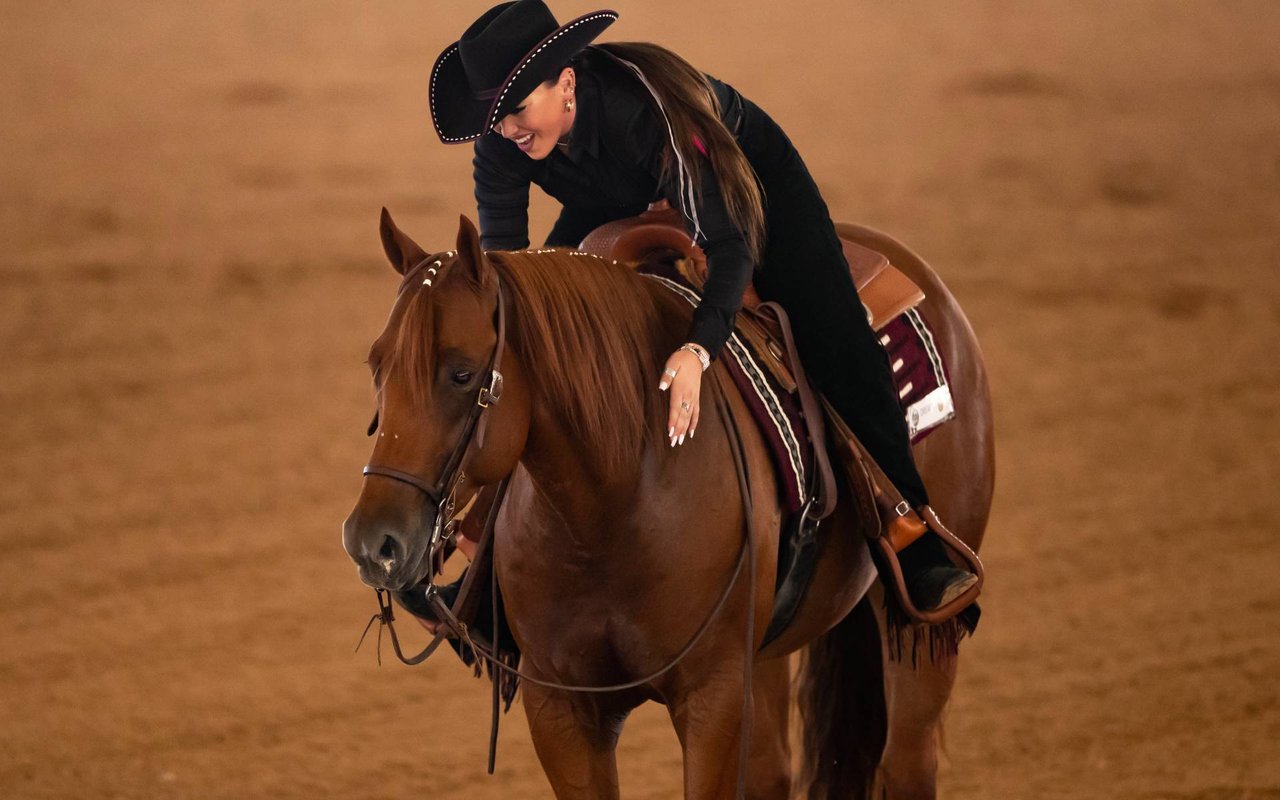
I didn’t just go to Texas A&M. I competed there. As a member of the Women’s Equestrian Team and a First Team All-American, I trained horses and competed at a level most people only watch. So when you ask me about horse property near Texas A&M, I’m not reading from a brochure — I’m telling you what I personally know about what a great equestrian property near Aggieland actually looks like.
My credentials speak for themselves: I’m a Global Equestrian Advisor, a Certified Equestrian Property Specialist (EquiAgent), an Engel & Völkers Land & Ranch Advisor, a proud Texas A&M Lettermen Member, and the host of The American Dream TV: Selling Texas. When I walk a horse property, I’m not checking boxes on a form — I’m seeing it through the eyes of someone who has lived this life.
The Aggie Equestrian Market Is Real — and Growing
The demand for horse property near Texas A&M isn’t a trend. It’s structural, and it’s driven by factors that aren’t going away anytime soon.
First, Texas A&M has one of the top collegiate equestrian programs in the country. That program draws horse people — riders, trainers, breeders, and families — to the Brazos Valley from across the nation. Many of them arrive for school and never leave. Others visit for competitions and start asking their agents about land. The equestrian culture here is deep and self-reinforcing.
Second, the Texas A&M Veterinary Teaching Hospital is one of the premier equine veterinary facilities in the world. For serious horse owners, proximity to world-class emergency and specialist care isn’t a luxury — it’s a necessity. Knowing that your horse is within 30 minutes of one of the best equine hospitals on the planet changes the calculus on where you’re willing to buy.
Third, the Brazos Valley’s terrain is genuinely well-suited for horses. Rolling land, good pasture grasses, and clay-based soils that hold up reasonably well under hoof traffic make this region a natural fit for equestrian use. It’s not an accident that horse properties cluster here.
Finally, buyers from Houston and DFW have discovered what locals already know. College Station sits at a sweet spot — close enough to major metros for weekend access, far enough out to offer real acreage at prices that still make sense. When those buyers want a horse property, the A&M corridor is increasingly where they look.
What Makes a Great Horse Property Near Texas A&M
This is where I earn my keep — and where having an agent who actually rides makes all the difference.
Start with acreage. The general rule of thumb is one to two acres of usable pasture per horse, and I emphasize usable. Steep slopes, heavily wooded areas, and low-lying ground that floods don’t count. A 10-acre property might only have five or six acres that are genuinely horse-friendly. I know how to read that when I walk a property.
Fencing is non-negotiable. Quality perimeter fencing means no-climb wire, pipe fence, or wood board — ideally a combination. Barbed wire is a liability around horses. I’ve seen what it does. When I evaluate a property, I’m looking at every fence line, every gate, every corner post.
The barn setup matters enormously. Stall dimensions should be at least 12x12 for most horses, larger for warmbloods or broodmares. Ventilation is critical in the Texas heat — a barn that bakes in August is a welfare issue, not just a comfort issue. You want adequate hay and feed storage that’s dry and rodent-resistant, and a wash rack with hot and cold water is a baseline expectation for any serious horse operation.
Arena footing is a topic I could talk about for hours. Sand, clay, decomposed granite — each has trade-offs. Sand drains well but can be deep and hard on tendons if not maintained. Clay is cheap and common but becomes a skating rink when wet and concrete when dry. Decomposed granite offers good drainage and consistency but needs to be installed correctly. A covered arena is a significant value-add in this climate. An open arena is workable but limits your riding days during Texas summers and rainy seasons.
Beyond the arena, I’m looking for a round pen, ideally a hot walker, and — critically — trailer access and turnaround room. You’d be surprised how many otherwise beautiful properties have a driveway that makes it nearly impossible to maneuver a four-horse slant with a living quarters. That’s a dealbreaker for working horse people.
Shade trees and loafing sheds in the pastures aren’t optional in Central Texas. Heat stress is real. And proximity to emergency equine veterinary care — with the A&M Vet Hospital as the gold standard — is something I factor into every property conversation I have with horse buyers in this region.
Where to Find Horse Properties Near Texas A&M
Not all counties are created equal when it comes to horse property near College Station, and knowing the differences can save you time and money.
Brazos County is the closest to campus and commands premium pricing. The infrastructure here tends to be the most developed — better roads, more established horse properties, easier access to services. If you want to be close to the A&M Vet Hospital and the equestrian community centered around campus, Brazos County is where you start.
Grimes County, 30 to 45 minutes out, offers larger tracts at lower price per acre. If you need 20, 30, or 50 acres and don’t want to pay Brazos County prices, Grimes is often the answer. The land is good, the horse culture is present, and the drive to College Station is manageable.
Robertson County, north of Bryan, gets more rural and more affordable as you move away from the metro. Buyers looking for 50-plus acres with serious agricultural infrastructure often find their best options here. It’s not for everyone, but for the right buyer — someone who wants a genuine working ranch — Robertson County delivers.
Madison County, along the I-45 corridor, is less commonly discussed but worth exploring. It offers a different access pattern — easier for Houston buyers, in particular — and some genuinely compelling properties that don’t get the attention they deserve.
Here’s what I tell every buyer I work with: the best horse properties near Texas A&M often sell off-market. They move through networks — trainer networks, breed association networks, the kind of word-of-mouth that only happens when you’re actually embedded in the equestrian community. That’s not a sales pitch. That’s just how this market works. And it’s why having an agent who is genuinely connected in that community isn’t a nice-to-have — it’s the whole game. Gig 'Em.
The Texas A&M Veterinary Teaching Hospital Advantage
I want to spend a moment on this because I don’t think it gets enough attention in the horse property conversation.
The Texas A&M College of Veterinary Medicine & Biomedical Sciences operates one of the top equine veterinary facilities in the world. This isn’t regional pride talking — it’s a facility that draws horses and horse owners from across the country for specialist consultations, advanced surgeries, and emergency care that simply isn’t available elsewhere.
For serious horse people, this changes everything about the College Station area as a place to own horses. Colic surgery at 2 a.m. Lameness workups with imaging technology most private practices don’t have. Reproductive services for breeding operations. Oncology. Ophthalmology. The depth of care available here is extraordinary.
When I’m working with a buyer who has high-value horses — performance horses, breeding stock, horses that represent significant financial and emotional investment — the proximity to the A&M Vet Hospital is often the deciding factor. Being within 30 to 45 minutes of that facility isn’t just convenient. For some horses, it’s the difference between life and death.
This is a genuine, tangible advantage that horse property near College Station has over comparable properties in other parts of Texas. I make sure every buyer I work with understands it.
What Horse Property Buyers Get Wrong Near College Station
After years of working in this market, I’ve seen the same mistakes made over and over. Let me save you from them.
The most common mistake is underestimating how much land they actually need. Buyers see a five-acre property and think it’s plenty for two horses. Then they move in, the pastures get overgrazed within a season, and they’re buying hay year-round because there’s nothing left to graze. Usable acreage matters more than total acreage.
Drainage is the second big one. Horse hooves are hard on wet ground. A pasture that looks beautiful in July can become a muddy, hoof-churned disaster by February. I look at drainage patterns, low spots, and soil composition on every property I evaluate. Buyers who skip this step often regret it.
Easements and access are another area where buyers get caught. A property might look perfect on paper but have an easement that limits what you can build, or a shared access road that creates ongoing conflict with neighbors. These are things you find in the title work — if you know to look.
Buying without an equestrian specialist is, frankly, the biggest mistake of all. A general real estate agent can tell you the square footage of the barn. They cannot tell you whether the stall layout is functional, whether the arena footing is salvageable, or whether the fencing is appropriate for horses. I can. That’s not arrogance — it’s experience.
Finally, buyers who focus exclusively on price per acre without factoring in infrastructure costs are setting themselves up for sticker shock. A bare 20-acre tract might be cheaper per acre than a developed horse property — but by the time you build a barn, put in fencing, grade an arena, and run water and electricity, you’ve often spent more than the premium on the developed property. I help my buyers run those numbers honestly.
Meet Lisa Bricker — Your Aggie Equestrian Property Specialist
There are a lot of real estate agents in the Brazos Valley. There is exactly one who competed on the Texas A&M Women’s Equestrian Team as a First Team All-American, holds both the Global Equestrian Advisor and EquiAgent (Certified Equestrian Property Specialist) designations, serves as an Engel & Völkers Land & Ranch Advisor, is a Texas A&M Lettermen Member, hosts The American Dream TV: Selling Texas, and has built a following of 12,000-plus engaged horse and land enthusiasts on Instagram.
That combination isn’t accidental. It’s the result of a life built around horses and a career built around serving the people who love them.
The Engel & Völkers platform gives my clients access to a global network of buyers and sellers — critical for high-value equestrian properties that deserve international exposure. My media presence on The American Dream TV: Selling Texas puts properties in front of audiences that traditional real estate marketing never reaches. And my equestrian designations mean I’ve been formally trained to evaluate horse properties in ways that protect my clients’ interests.
But honestly? What matters most is that when I walk your property, I see it the way a horse person sees it. I know what good footing feels like underfoot. I know what a well-designed barn looks like from the inside. I know what questions to ask and what answers to trust. That’s what you get when you work with me.
If you’re looking for a horse property near Texas A&M, you deserve an agent who has actually ridden in Aggieland — not just sold near it. Call or text Lisa Bricker. Let’s find your forever farm. You can also find her and follow her journey on Instagram at @lisabricker.realtor — where she shares horse property insights, land listings, and a genuine love for the equestrian life.