Texas is enormous — and that fact matters more than most buyers realize when they start searching for horse property. The rolling prairies of North Texas and the sandy loam corridors of Central Texas may both carry the Lone Star brand, but they represent fundamentally different equestrian markets with different price points, cultures, climates, and competitive ecosystems. In 2026, the debate over North Texas vs Central Texas horse properties is one of the most consequential decisions an equestrian buyer can make. Choose the wrong region and you may find yourself paying a premium for infrastructure you don’t need, or settling for a lifestyle that doesn’t match your discipline. Choose wisely, and you’ll have a property that works as hard as your horses do.
The stakes are high enough that buyers increasingly seek out specialists who know both markets from the inside — not just as real estate professionals, but as horsewomen and horsemen who have lived the life.
Meet Lisa Bricker: A Specialist Who Knows Both Markets
Lisa Bricker is a Certified Equestrian Property Specialist and Global Equestrian Advisor with Engel & Völkers Land and Ranch Group, and the host of ADTV’s Selling Texas. Based in College Station, she serves buyers and sellers across the entire Texas Triangle — the corridor connecting Dallas-Fort Worth, Houston, Austin, and San Antonio. What sets Lisa apart from a generalist land agent is her personal equestrian background: she grew up on a ranch, competed across multiple disciplines, and understands the difference between a property that looks good on paper and one that actually functions for horses and their owners.
That lived experience gives Lisa Bricker a rare ability to compare North Texas and Central Texas horse properties honestly, without the regional bias that can color advice from agents who only work one side of the state. When buyers ask her which market is right for them, her answer always starts with the same question: What do you actually need the property to do?
Price Per Acre
Let’s start with the number that stops most buyers cold: price per acre. North Texas — particularly Denton, Parker, Wise, and Tarrant counties — commands a significant premium over most of Central Texas. The reasons are structural. Decades of investment in equestrian infrastructure, proximity to the DFW metroplex, and a deep pool of performance horse buyers have driven land values upward and kept them there. In established equestrian corridors like Weatherford and Pilot Point, buyers should expect to pay a premium that reflects not just the land but the ecosystem around it: trainers, veterinarians, farriers, feed suppliers, and competition venues are all within a short haul.
Central Texas tells a different story in most counties. Outside the Hill Country — where lifestyle demand from Austin buyers has pushed prices sharply higher — counties like Grimes, Robertson, Madison, Leon, and Brazos offer substantially more acreage per dollar. A buyer who can get 50 acres in Central Texas for the same price as 20 acres in Parker County is not necessarily getting a lesser property. They may be getting a better one, depending on their goals. For buyers focused on value per acre and operational flexibility, Central Texas is the stronger play in the current market.
Horse Culture and Competition Infrastructure
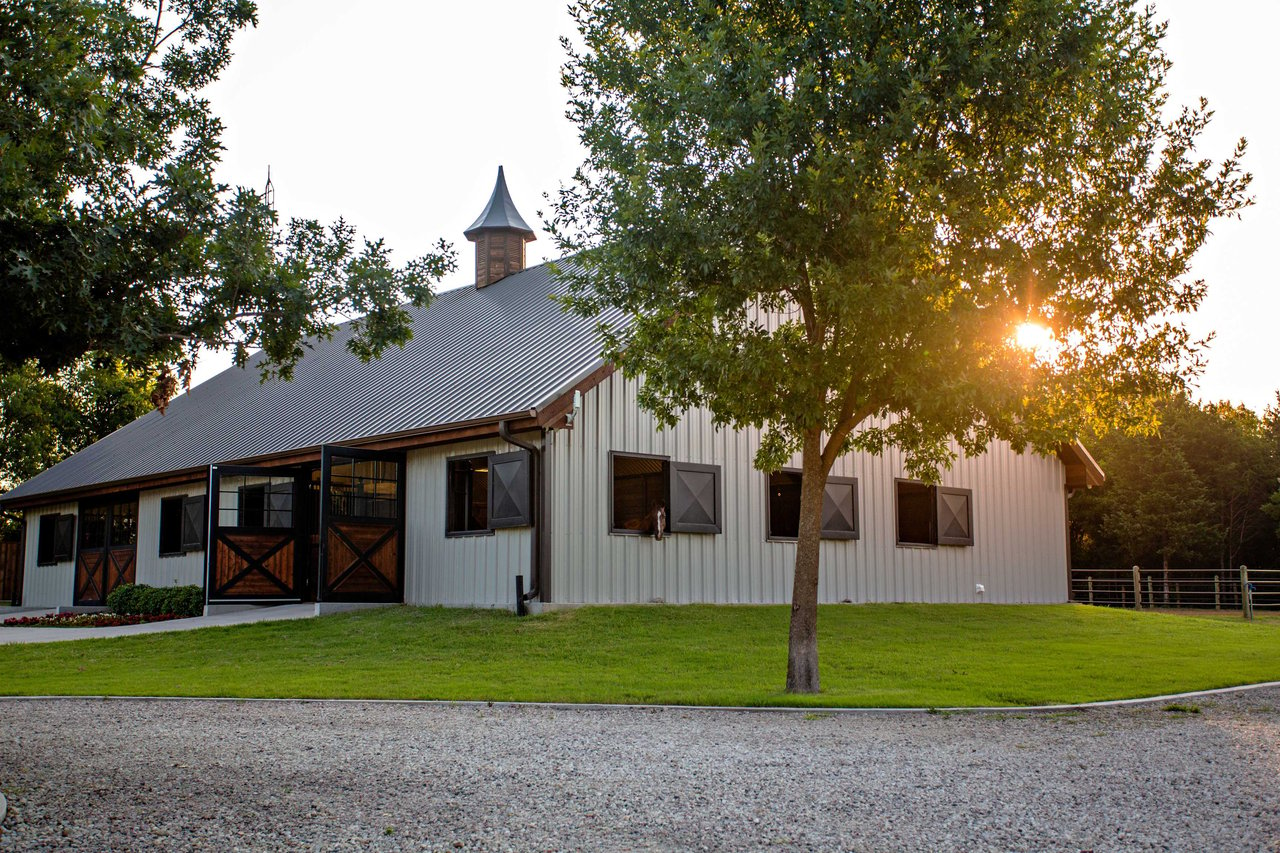
This is where North Texas pulls ahead decisively for a specific type of buyer. The concentration of National Cutting Horse Association (NCHA) trainers, National Reining Horse Association (NRHA) events, and elite performance horse breeding operations in Denton and Parker counties is unmatched anywhere in the country. Weatherford, Texas, has earned its reputation as the cutting horse capital of the world, and that reputation is backed by real infrastructure: world-class training facilities, a dense network of professional trainers, and a competitive calendar that keeps serious performance horse owners engaged year-round.
For buyers whose horses are their business — or whose competitive ambitions require access to top-tier trainers and frequent show opportunities — North Texas is difficult to beat. The community is established, the support network is deep, and the culture is unapologetically performance-oriented.
Central Texas offers a different kind of equestrian infrastructure. The Texas A&M College of Veterinary Medicine in College Station is one of the premier equine veterinary facilities in the nation, providing access to cutting-edge diagnostics, surgery, and rehabilitation that many horse owners in North Texas have to travel for. The competitive scene in Central Texas is growing, with barrel racing, roping, and pleasure disciplines well represented across the region. It may not have the density of NCHA trainers that Weatherford does, but for buyers who don’t need that specific ecosystem, Central Texas delivers strong support at a lower cost of entry.
Climate and Terrain
Horse health is inseparable from the land and climate a property sits on, and this is an area where Central Texas holds a meaningful advantage for many buyers. The Post Oak Savannah region — which stretches across much of the Brazos Valley and surrounding counties — features sandy loam soils that drain quickly, stay workable after rain, and are widely regarded as among the best footing for horses in the state. Horses kept on sandy loam tend to have fewer hoof and joint issues than those kept on heavy clay soils, and the terrain is gentle enough to support a wide range of facility configurations.
North Texas sits primarily on blackland prairie and Cross Timbers geology. The heavy clay soils of the blackland prairie are notoriously difficult to manage — they shrink and crack in drought, become slick and compacted in wet weather, and require significant investment in arena footing and pasture management to keep horses comfortable. The Cross Timbers region in Parker and Palo Pinto counties offers better drainage and more varied terrain, which is part of why it has become the preferred zone for serious equestrian operations.
On climate, North Texas experiences colder winters with occasional ice storms that can disrupt operations and increase hay and feed costs. Central Texas winters are milder on average, with fewer hard freezes and a longer grazing season that reduces feed overhead. For buyers managing large numbers of horses, that difference in operating cost adds up over time.
Disciplines
Discipline alignment is one of the most underweighted factors in the Texas horse property comparison, and it’s one Lisa Bricker consistently raises with buyers early in the process. North Texas is the undisputed home of cutting, reining, and performance horse disciplines. If you are a cutting horse competitor, a reiner, or a performance horse breeder, the infrastructure, community, and competitive calendar in North Texas are built for you. The culture is competitive, professional, and deeply invested in the performance horse world.
Central Texas is more varied in its equestrian identity. Recreational trail riding, barrel racing, team roping, pleasure riding, and ranch horse disciplines all have strong followings across the region. The Texas A&M equestrian community adds a collegiate dimension that North Texas lacks. For buyers who want flexibility — who may trail ride on weekends, rope on Saturdays, and aren’t tied to a single competitive discipline — Central Texas offers a more open equestrian culture without the pressure of a performance-horse-centric community.
Commute and Metro Access
For buyers who need to balance horse property ownership with professional careers or family logistics, metro access matters. North Texas horse property buyers benefit from proximity to the DFW metroplex — one of the fastest-growing metro areas in the country, with two major international airports, a deep job market, and extensive suburban infrastructure. Buyers in Denton or Parker County can reach downtown Dallas or Fort Worth in under an hour under normal conditions.
Central Texas occupies a different kind of strategic position. Properties in the Brazos Valley and surrounding counties sit roughly equidistant between Houston, Austin, and San Antonio — the three other major Texas metros. For buyers with ties to multiple cities, or for those who travel frequently for work, the central location of the Texas Triangle corridor can be a genuine advantage. College Station itself has a regional airport with connections to major hubs, and the highway network connecting the region to Houston and Austin has improved significantly in recent years.
Agricultural Exemptions
Both North Texas and Central Texas offer robust agricultural exemption programs that can dramatically reduce the property tax burden on horse properties. In Texas, AG exemptions are administered at the county level, and the specific requirements — minimum acreage, number of animals, intensity of use — vary by county. In both regions, horse ownership generally qualifies for AG exemption status, though buyers should verify current county requirements before making assumptions.
The practical impact of an AG exemption can be substantial: properties that would otherwise carry a significant annual tax bill based on market value are instead taxed on their agricultural productivity value, which is typically a fraction of market value. Buyers comparing properties across regions should always factor in the AG exemption status and the likelihood of maintaining it, as losing an exemption can materially change the economics of ownership.
Who Should Buy in North Texas?
North Texas is the right market for a specific profile of equestrian buyer. If you are a performance horse competitor — particularly in cutting, reining, or related disciplines — the concentration of trainers, events, and peer community in Denton and Parker counties is genuinely irreplaceable. If your professional life is anchored in the DFW metro and you need to balance a demanding career with horse ownership, North Texas gives you the infrastructure to do both without sacrificing either. And if you want to be embedded in an established, deeply experienced equestrian community where horses are taken seriously as a profession and a passion, North Texas delivers that culture at a level Central Texas has not yet matched.
Buyers should go in with clear eyes about the price premium and the soil management challenges, but for the right buyer, those costs are worth paying.
Who Should Buy in Central Texas?
Central Texas is the right market for buyers who prioritize value, flexibility, and lifestyle over competitive infrastructure. If you are seeking the best place to buy horse property in Texas on a per-acre basis outside the Hill Country, Central Texas counties like Grimes, Robertson, Madison, and Leon consistently offer more land for the money. If your equestrian life is recreational rather than competitive — trail riding, pleasure horses, small-scale roping or barrel racing — Central Texas gives you the space and the terrain to build the property you want without paying for infrastructure you’ll never use.
Buyers with professional ties to Houston or Austin will find Central Texas logistically convenient in a way that North Texas simply cannot match. And for those who want a quieter equestrian lifestyle — away from the intensity of the performance horse world — the Brazos Valley and surrounding counties offer a pace and a culture that many buyers find deeply appealing. Where to buy equestrian property in Texas ultimately depends on your life, not just your horses.
The Texas Triangle Corridor: A Hybrid Answer
For buyers who don’t fit neatly into either the North Texas or Central Texas profile, the Texas Triangle corridor — the region connecting College Station, Houston, and San Antonio — is emerging as a compelling mid-market answer. This corridor combines the affordability and terrain advantages of Central Texas with improving infrastructure, growing equestrian communities, and access to multiple major metros. It is not yet as developed as the established equestrian zones of North Texas, but that is precisely what makes it attractive to buyers who want to get ahead of the market.
Properties in this corridor often offer the sandy loam soils and mild winters of Central Texas, reasonable proximity to Houston and San Antonio, and price points that allow buyers to acquire meaningful acreage without stretching their budgets. As the Texas Triangle continues to grow, this corridor is likely to see increasing demand from equestrian buyers who are priced out of North Texas or the Hill Country but unwilling to compromise on land quality.
Work With a Specialist Before You Commit to a Region
The single most expensive mistake equestrian buyers make is committing to a region before they fully understand what they’re buying into. Soil type, water availability, AG exemption status, proximity to veterinary care, and the character of the local equestrian community are all factors that don’t show up in a listing price — but they determine whether a property works for you over the long term.
This is exactly why working with a specialist like Lisa Bricker before you commit to a region is not a luxury — it’s a strategic necessity. Lisa has walked properties in both North Texas and Central Texas, understands the operational realities of each market, and brings a personal equestrian perspective that no generalist agent can replicate. Her role is not to steer you toward one region or the other, but to help you match your specific needs, disciplines, budget, and lifestyle to the market that will actually serve you best. In a state as large and varied as Texas, that kind of honest, experienced guidance is the difference between a great investment and a costly mistake.
Ready to Find Your Texas Horse Property?
If you’re ready to start comparing North Texas and Central Texas horse properties with an advisor who knows both markets from the ground up, contact Lisa Bricker directly. Reach her at lisamariebricker.com or by phone at (979) 446-5340. Whether you’re a performance horse competitor looking for your next training facility or a lifestyle buyer searching for the perfect recreational ranch, Lisa Bricker and the Engel & Völkers Land and Ranch Group are ready to help you find the right property in the right market.