Looking for acreage where your horses thrive without giving up convenience? Washington County gives you a rare mix of rolling country, trail access, and quick trips to town. In this guide, you will learn which pockets fit different riding goals, what to check in soils and floodplain, and the permits and tax items that matter. Let’s dive in.
Where to focus your search
Brenham: town access and commutes
Brenham puts you closest to vets, feed and tack, hospital services, and Blinn College, with both in-town utilities and nearby rural tracts. Many horse listings here show 5–20 acres and turnkey barns with cross-fencing and private wells just outside city limits. Always confirm if a parcel sits inside Brenham city limits or in unincorporated county since permit rules and utilities can differ. If you commute, Brenham is about 39 miles to College Station, roughly a 45 to 50 minute drive according to the Brenham to College Station route. It is about 74 miles to Houston and around 89 miles to Austin, depending on your exact address and route.
Chappell Hill: scenic, estate properties
Chappell Hill is a historic village known for rolling hills, hilltop views, and lifestyle estates. You often see 10 to 80 plus acre properties with private barns, ponds, and arena spaces. Services are a short drive into Brenham, so this pocket fits you if you value landscape, character, and quiet. Learn more about the area’s setting in the Chappell Hill overview.
Burton and west county: larger ranches
Western Washington County and the Burton area lean ranch-style with larger rolling parcels and older homesteads alongside modern improvements. Look here if you want 20 to 100 plus acres, room for an arena, multiple pastures, and the privacy to run a small boarding or training program. These tracts are better for working acreage and recreation than immediate access to town utilities.
FM corridors and Round Top influence
FM roads between Brenham, Chappell Hill, and toward Round Top mix small lifestyle tracts with larger ranch sales. The Round Top to Burton corridor can push prices due to scenic views and event-driven demand. Use fresh comps before you write an offer.
Land, soils and floodplain basics
Washington County sits on the Blackland Prairies and Gulf Coastal Plain margin, with gently rolling elevations around 200 to 500 feet and widespread clayey soils. These clay soils influence drainage, pasture species selection, and septic design. For a deeper look, review the county’s terrain and soils via the Texas State Historical Association entry. Floodplains follow the Brazos River and local creeks. For any parcel, request a floodplain determination early and review FEMA FIRM maps. Start with the Washington County Environmental page and the county’s floodplain determination guide.
Pasture capacity and forage
A common rule of thumb is 1 to 2 acres of well-managed pasture per horse. This varies with soil type, rainfall, rotational grazing, and fertilization. Plan to test soils, set up rotational paddocks and a sacrifice lot, and budget for hay in summer or during drought. For a general overview, see extension guidance in the Ask the Expert archive.
Utilities, permits and taxes
If you want an agricultural valuation, review Washington County’s 1-d-1 open-space guidelines before you buy. Eligibility depends on use, history, and documentation. Read the county’s 1‑d‑1 policy manual and call the Appraisal District with parcel-specific questions. Texas counties have limited zoning, but city rules apply inside city limits and in municipal ETJs. Confirm whether your tract lies in Brenham or another city and ask about permits, well and septic rules, and any floodplain requirements. The Washington County Environmental office is your primary county contact. Most rural horse parcels rely on private wells and on-site sewage systems. Verify well depth and yield, water quality, and septic type and condition through inspections and records. Also confirm recorded easements, road access, and maintenance responsibilities with your title team.
Common equestrian setups here
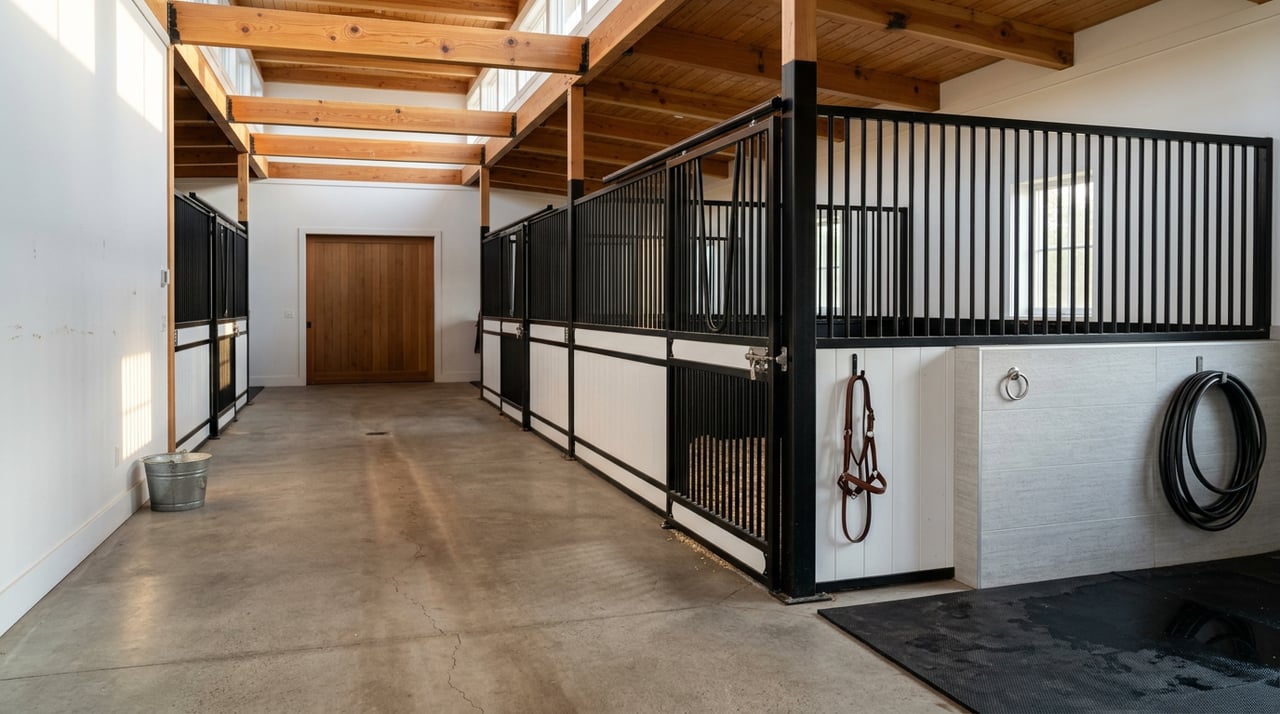
Local listings frequently feature 4 to 15 stall barns with tack and hay storage, pipe or board fencing with cross-fenced paddocks, loafing sheds, round pens, and outdoor arenas. Arena bases are often sand or grass, commonly around 100 by 200 feet, with higher-end estates adding guest quarters and ponds. Inspect footing quality, drainage around the barn, and fencing safety before you fall in love with the view.
Price snapshots to expect
Recent examples show how features and location drive price per acre. A Burton-area ranch around 49.7 acres listed near $1,695,000 reflects larger scenic tracts with barns and ponds. A Chappell Hill estate around 21.2 acres listed near $2,450,000 shows how premium improvements, proximity, and character increase price per acre. Ten to twenty-five acre lifestyle tracts around Brenham and Chappell Hill vary widely by improvements and drive time. Always verify current MLS data before you set your budget.
Buyer checklist for horse parcels
Use this quick list on every showing:
- Confirm if the land is inside city limits or unincorporated county. Start with the county environmental page for guidance.
- Get a floodplain determination early and review FEMA FIRM maps. Use the county’s floodplain determination guide.
- Review 1‑d‑1 status, history, and eligibility. Read the 1‑d‑1 policy manual and call the CAD.
- Verify well yield and water quality; inspect the septic system and drainfield capacity.
- Inspect fencing, stalls, arena base, and gates. Avoid barbed wire in horse areas.
- Assess pasture: soil tests, forage species, drainage, and a simple grazing plan. Remember the 1 to 2 acres per horse guideline and plan for hay.
- Check emergency access, trailer turning radius, and travel time to your preferred equine vet and farrier. A starting point is the Washington Animal Clinic directory entry.
- Confirm road access, easements, and mineral rights with your title team.
Ask the seller for
- 1‑d‑1 paperwork, floodplain letter, well and septic test results, fence and arena maintenance records, and vet or farrier references.
Local contacts and resources
- Washington County Appraisal District — 1‑d‑1 open-space policy manual
- Washington County Environmental — floodplain and permitting info and floodplain determination process
- Texas Parks & Wildlife — equestrian trails and rules at Lake Somerville State Park & Trailway
- Extension reference — pasture management Q&A
Whether you are a commuter hobby rider, a trainer planning a small program, or a weekend trail rider, Washington County has a pocket that fits your rhythm. If you are ready to refine your search, compare parcels, and walk the land with an equine-savvy advisor, connect with Lisa Bricker to schedule a consultation.
FAQs
Which Washington County area suits a commuter who rides?
- Brenham often fits best with close-in services and shorter commutes, about 45 to 50 minutes to College Station and roughly 74 miles to Houston depending on route.
How many acres per horse work in Washington County?
- Plan on 1 to 2 acres of well-managed pasture per horse, then adjust after soil tests and forage yields and budget hay for summer or drought periods.
What is 1‑d‑1 agricultural valuation and who qualifies?
- It is a property tax valuation for eligible open-space agricultural use; review the county’s 1‑d‑1 manual and confirm your parcel’s history and activity with the CAD before purchase.
How do I check floodplain status for a horse property?
- Request a county floodplain determination letter and review FEMA FIRM maps, starting with Washington County Environmental’s guidance and forms online.
Are there public riding trails near Brenham?
- Yes, Lake Somerville State Park & Trailway offers multi-use equestrian trails and campsites; check TPWD rules and Coggins requirements before your visit.