Moving your horses to College Station should feel exciting, not overwhelming. You want a plan that protects your animals, keeps your routine steady, and gets you riding again fast. In this guide, you’ll find a clear, step-by-step playbook tailored to Brazos County that covers permits, boarding, transport, barn-building timelines, and how to assemble your local team. Let’s dive in.
Know the local context
Heat, forage, and water
College Station’s climate is hot and humid in summer with mild winters, so shade, airflow, and constant access to clean water top your priority list. Warm-season forages like bermudagrass and native bluestem are common. If you keep broodmares, ask about pasture composition and hay sources, since endophyte-infected tall fescue can cause reproductive issues.
Hay availability and pricing shift seasonally in this region. Secure a local hay supplier before move-in and plan storage. For regional pasture planning and grazing tips, connect with the Texas A&M AgriLife Extension.
City vs county rules
First, confirm whether the property sits inside College Station city limits or in unincorporated Brazos County. City properties generally require building permits, site plans for accessory structures, and may have usage and lot-size rules. County parcels often have fewer restrictions but still require septic, well, and driveway permits.
Review permit requirements directly with the City of College Station and Brazos County before you make an offer. Typical approvals for equestrian use include accessory agricultural buildings, septic tests, well permits, grading for arenas, and electrical for barn utilities.
Deed restrictions and floodplain checks
Many subdivisions and rural communities use deed restrictions or HOAs that limit livestock or define fencing and barn standards. Ask your agent for these documents early. Also verify FEMA floodplain status and any utility easements that could impact barn and arena placement using the FEMA flood maps.
Build your property checklist
Use this quick buyer’s checklist during showings and inspections:
- Acreage and usable pasture after setbacks, tree cover for shade, and drainage patterns or low spots.
- Flooding history and FEMA status, plus any easements that limit structures or fencing.
- Soil type and compaction for arena base planning and septic performance.
- Water source and capacity: well flow rate and quality, municipal availability, hydrant locations, and initial storage if hauling water.
- Septic capacity and layout if adding a tack room sink or wash rack wastewater.
- Electrical service: panel location, amperage, and propane or gas for hot water.
- Fencing and gates: type, condition, safe height for horses, and suitability for foals.
- Access for trailers and hay trucks: turning radius, overhead clearance, and road conditions.
- Insurance and liability considerations if you plan to board horses for pay.
Line up temporary housing
Where boarding fits in a move
- Pasture board. Lower cost and less confining. Works well short term if your horse thrives with turnout and herd mates. Monitor water and parasite control.
- Stall or full-care board. Best for horses used to stalls or with special needs. Staff can keep feeding and turnout steady during the transition.
- Layover and overnight options. Some facilities allow overnight stays for haulers. Confirm late arrival rules and feeding schedules.
- Training or rehabilitation barns. Helpful for specialized programs, though often pricier and may require an application.
If you need a stopgap, you can also consider short-term stalls at show facilities, a written pasture agreement with a trusted private owner, or portable panels if allowed and properly managed for waste and safety.
How to find and vet barns
Start with local barn directories, equine Facebook groups, and word-of-mouth. The Texas A&M Veterinary Medical Teaching Hospital is a respected regional resource for referrals.
When you call or visit, ask about:
- Availability, waitlist policies, and stall assignment.
- Turnout schedule, staff-to-horse ratios, feeding brands and times.
- Vaccination and negative Coggins requirements, quarantine practices, and sanitation between new arrivals.
- First-aid protocols, overnight monitoring, and farrier or vet schedules.
- Contracts, deposits, liability insurance, and evacuation plans.
- Manure management, fly control, waterer maintenance, and shelter in turnout areas.
Evaluate on site: stall safety, fencing condition, drainage in paddocks, clean waterers, shelter access, and overall cleanliness. Observe how staff handle horses and whether the herd looks calm and in healthy condition.
Costs vary with services and amenities. Ask for a full fee sheet that lists monthly board plus extras like blanketing, lessons, turnout, and handling fees for vet or farrier visits.
Paperwork and transport
Health documents for Texas
For interstate travel, you typically need a current negative Coggins test and an Interstate Certificate of Veterinary Inspection. Confirm specifics with the Texas Animal Health Commission and the USDA APHIS interstate movement guidance. Most boarding barns also require proof of core vaccinations and may ask for recent deworming details.
Choose the right hauler
Decide between a professional hauler, a smaller commercial operator, or hauling yourself. For multi-horse, long-distance moves, professional haulers often reduce stress and liability.
Before you book, confirm credentials and insurance. Ask about route experience, rest stops, and overnight arrangements. For longer trips, plan one overnight stop for horses unaccustomed to extended travel. Pack familiar hay, limit feed changes, offer water frequently, and keep copies of all health papers and emergency contacts within reach.
Arrival and biosecurity
Give your horse 24 to 72 hours to settle with minimal handling. Maintain familiar feeding times and offer the same hay for a week while you transition. Monitor appetite, manure, and demeanor closely for 7 to 14 days. If possible, isolate new arrivals for 7 to 14 days to reduce disease risk. Notify your vet promptly if you see signs of colic, laminitis, respiratory strain, or abnormal manure.
If you are building a barn
Typical high-level timeline
Every project varies, but this is a realistic range in Brazos County:
- Pre-purchase planning and site layout: 1 to 4 weeks.
- Permitting and approvals: 2 to 12-plus weeks, depending on city or county processes and HOA approvals.
- Site work and utilities: 2 to 6 weeks for clearing, grading, drive, and connections for electric, well, and septic.
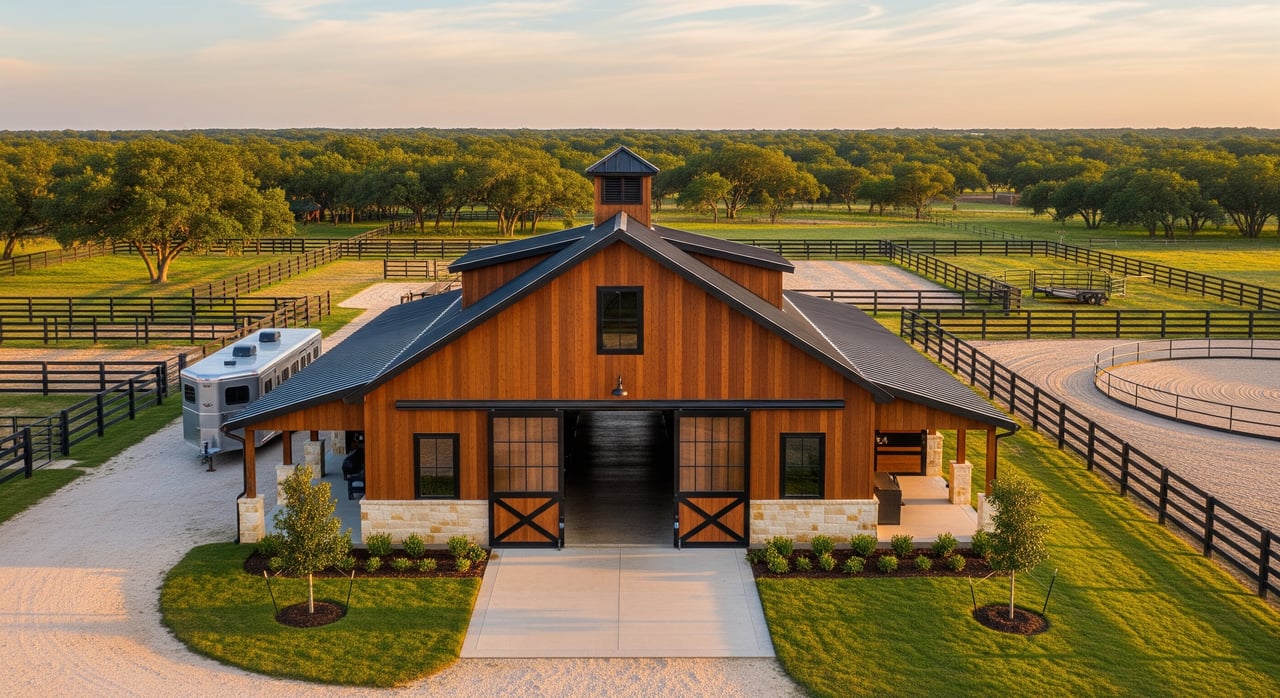
- Barn construction: 4 to 12 weeks, faster for pre-engineered metal or pole barns, longer for custom builds.
- Fencing and paddocks: 1 to 4 weeks, subject to contractor schedules.
- Arena build and surfacing: 4 to 8-plus weeks, with weather or drainage adjustments adding time.
- Final inspections and occupancy: 1 to 4-plus weeks for utilities and building sign-offs.
Decisions that change cost and timing
- Building type. Pre-engineered metal or pole barns are typically faster and more cost-effective than custom timber builds.
- Contractor specialization. Choose teams experienced with equine facilities to avoid ventilation, drainage, or stall-safety mistakes that are expensive to fix.
- Utilities. New wells and septic systems can drive both cost and schedule. Coordinate early with local authorities.
- Arena drainage. Invest in proper base, grading, and subsurface drainage, especially if soil has poor percolation.
Practical staging plan
- Board off-site for the first 1 to 3-plus months. Permit approvals and build-out take time. Keep your horse’s routine consistent while you finish the property.
- Line up hay, feed, and core supplies before your first turnout at home. Early coordination with a local hay supplier prevents gaps.
- Schedule local vet and farrier visits. Adjust hoof balance for footing changes and address minor issues before full turnout.
Find your local team
Anchor resources to contact early
- Texas A&M Veterinary Medical Teaching Hospital for specialty care and referrals. Start at tamu.edu.
- Texas A&M AgriLife Extension for pasture management, hay testing guidance, and local agricultural resources at agrilife.org.
- State and federal health rules via the Texas Animal Health Commission and USDA APHIS.
- Local permits and code with the City of College Station and Brazos County.
Providers to source and vet
- Equine veterinarians and clinics, plus a hospital for emergencies.
- Farriers with experience in your discipline or special shoeing needs.
- Trainers and instructors aligned with your program.
- Hay suppliers and brokers with seasonal reliability and quality transparency.
- Feed and tack stores that stock your preferred feed lines.
- Barn builders and contractors specializing in equine safety and drainage.
- Arena and fencing contractors with local footing and safety expertise.
- Emergency services and evacuation contacts, including fairgrounds or regional sites that accept horses in emergencies.
Hay testing and nutrition
When changing regions, test hay so your nutrition plan matches actual forage. Use accredited labs and adjust rations with your vet’s guidance. Introduce new hay or supplements over 7 to 10 days to minimize digestive stress.
12-week move timeline
Use this practical schedule to reduce surprises:
12-plus weeks out
- Review deed restrictions and HOA rules.
- Call city or county to confirm permit paths and timelines.
- Secure boarding for 1 to 3 months to bridge construction or move-in.
- Request Coggins, vaccination records, and ICVI from your vet.
- Collect hauler quotes and confirm availability.
6 to 8 weeks out
- Lock in hay and feed suppliers and schedule an initial delivery window.
- Book a farrier appointment close to move date.
- Finalize your boarding contract and entry requirements.
- Start site planning and contractor bids if building.
2 to 4 weeks out
- Confirm hauler, route, and overnight stops.
- Send health paperwork to the receiving barn.
- Prepare travel equipment and an emergency kit.
- Keep feed consistent and stock familiar hay for the trip and arrival.
Move week and day
- Keep your routine steady and minimize last-minute changes.
- Carry printed and digital copies of health papers and contacts.
- Offer water regularly and use familiar hay during transport.
- On arrival, walk the horse, settle into the stall or paddock, and keep the first 48 hours quiet.
1 to 4 weeks post-arrival
- Monitor appetite, manure, and demeanor daily.
- Follow quarantine or isolation policies as required.
- Schedule vet and farrier visits at your new location.
- Transition turnout and feed gradually.
Ready for a smooth move?
Relocating your horses to College Station is completely doable with the right plan, permits, and partners. If you want local, equine-savvy guidance on acreage, barns, and boarding options in Brazos County, connect with Lisa Bricker. We’ll map your move, match you with the right property, and protect your horses’ routine every step of the way.
FAQs
What documents do I need to bring my horse into Texas?
- Most interstate moves require a current negative Coggins test and an Interstate Certificate of Veterinary Inspection, plus vaccination records per your receiving barn’s policy.
How long should I plan to board off-site after moving?
- Many families plan 1 to 3-plus months to cover permitting and construction timelines, unless you buy a property that is already horse-ready.
Are there enough boarding options around College Station?
- Yes. The Brazos Valley supports multiple boarding facilities and equine services, anchored by the Texas A&M community, though availability fluctuates seasonally.
What fencing styles are considered safe for horses here?
- Post-and-rail, high-tensile smooth wire with a top rail, or durable board fencing are common safe choices; avoid barbed wire for horse pastures.
What local resources can help me plan pasture and forage?
- The Texas A&M AgriLife Extension provides regional pasture management guidance and hay testing resources, and local agents can point you to vetted suppliers.