Are you picturing cattle and hay season, or a quiet weekend place with trails and a pond? In Burleson County around Caldwell and Somerville Lake, the right acreage depends on how you plan to use it. You want land that fits your lifestyle and also checks out on water, access, taxes and long‑term management. This guide breaks down the differences between a true working ranch and a recreational or horse property, then walks you through local rules, due diligence, and quick checklists to use before you write an offer. Let’s dive in.
Clarify your purpose and scale
Before you tour a single tract, decide if your main goal is production or recreation. A working ranch focuses on livestock or hay, with infrastructure sized for frequent animal movement and seasonal harvest. You’ll look for multiple pastures, durable roads for tractors and hay trucks, and functional working pens. A recreational or hobby property leans into privacy and play, with trails, a pond, modest barn space, and simpler day‑to‑day management.
Burleson County land basics
Burleson County sits in the transition between the Post Oak Savannah and the Blackland Prairie. The terrain is rolling to gently rolling, with oak‑savannah vegetation and claypan soils that influence forage, brush growth, and wildfire risk. Around Somerville Lake, summers are hot and humid, and annual rainfall commonly falls in the low‑to‑mid 40 inches, though rainfall varies by parcel. Always confirm micro‑site conditions on the tract you are evaluating.
Soils here range from heavy clays to sandier terrace soils. Soil type affects stocking rates, pond construction, erosion risk, and septic decisions, so pull the USDA/NRCS soil survey for the exact parcel before you price the land. Somerville Lake is a major recreation anchor and may shape nearby rules and recreation demand. Groundwater is locally regulated by the Post Oak Savannah Groundwater Conservation District, which oversees well registration and certain permits.
Working ranch features to verify
Pastures and fencing
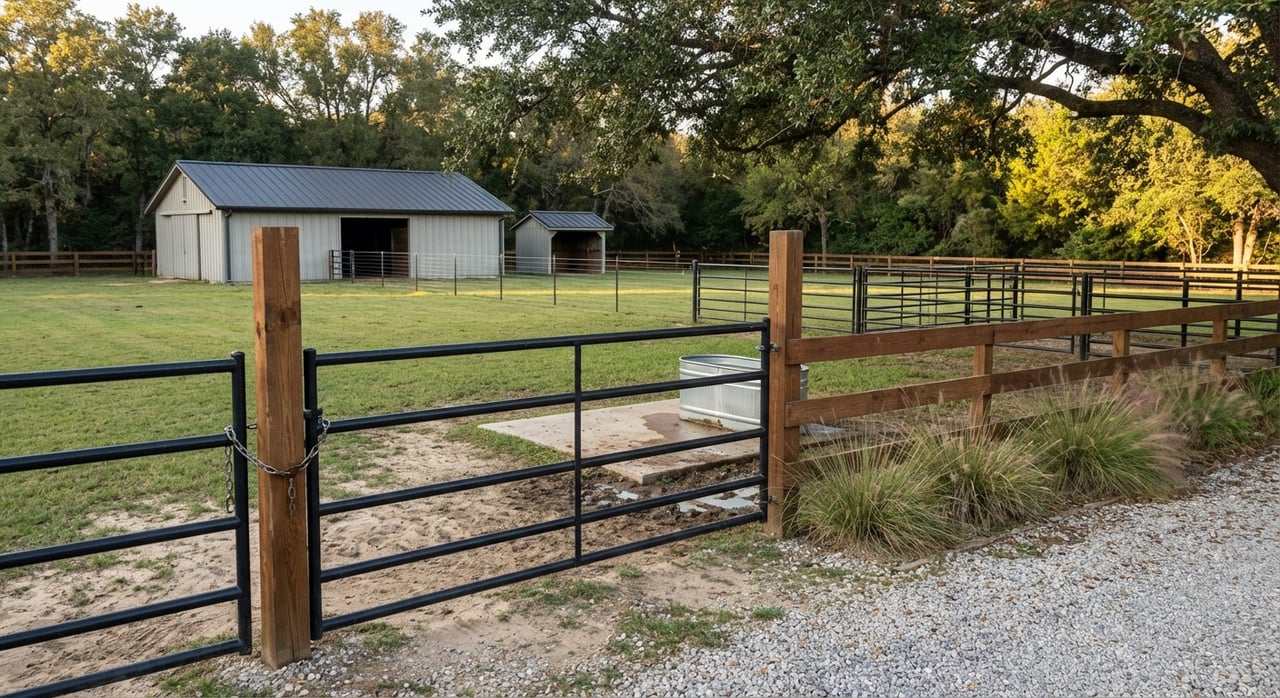
Look for cross‑fenced pastures sized for rotational grazing. Strong perimeter fencing suited for cattle, clear internal lanes, and well‑placed gates make animal moves and equipment access easier. Rotational grazing is widely recommended for better forage use, so the layout matters. Check that gates allow easy passage for trailers and hay trucks.
Water systems and wells
A working ranch needs multiple, reliable stock water points. Confirm the number and location of working troughs, tanks, and any creeks or ponds. Ask for well logs, pump test results, and any groundwater district registrations or permits. If livestock will rely on the well, plan a drawdown test and confirm backup power options like a generator or solar if needed.
Handling facilities and access
Evaluate the working pens, alleyways, and squeeze chute. A solid loading chute and chute‑scale or gauge make routine herd work safer and faster. Make sure trucks can reach the loading area without issue, and that access to the public road is straightforward in all weather.
Hay, feed, and equipment storage
Large hay barns, covered storage for round bales, and tractor or equipment bays are common on a production‑oriented property. Confirm turning radius and road base strength for semis or heavy loads. If haying is done onsite, estimate seasonal storage and staging needs.
Recreational or horse property features
Horse‑safe layout and fencing
For equine use, prioritize horse‑safe fencing such as board, pipe, or smooth high‑tensile with visibility. Barbed wire is common for cattle but hazardous for horses. Paddocks near the barn, separate turnout areas, and a small dry lot help manage mud and daily care. Gate hardware, paddock size, and shaded run‑in areas support safe routines.
Arena, stalls, and support spaces
If riding or lessons are a goal, look for a well‑drained outdoor arena pad and stalls sized for comfort. A typical stall is 12 by 12 feet, and a basic outdoor arena around 60 by 120 feet supports cantering. A tack room, hay storage, and a simple manure management plan round out everyday function.
Water, ponds, and trails
A single domestic well plus a pond can be enough for a hobby property. Still, test the well’s yield and water quality, confirm any groundwater district paperwork, and evaluate pond banks for erosion control. Trails, a small arena area, and quiet corners of the land can deliver the retreat you want without heavy infrastructure.
Local taxes, permits, and rules that matter
Agricultural appraisal and wildlife management
Burleson County Appraisal District supports 1‑d‑1 open‑space (ag) valuation and accepts wildlife management plans that help preserve that valuation when you manage for habitat. Ask the seller for the property’s current classification, prior applications, and reports. Filing rules and deadlines apply, so review the county calendar.
Groundwater oversight
The Post Oak Savannah Groundwater Conservation District handles well registration and certain operating permits in Burleson County. Before closing, confirm any required well registration, permits, and whether the property participates in any district programs. Align your planned uses with the district’s current rules.
Floodplain, septic, and driveway permits
Burleson County participates in the National Flood Insurance Program, so construction or improvements in mapped floodplain areas will need permits. The county also oversees onsite sewage facility permits for new or replacement systems. If your driveway connects to a county right‑of‑way, expect to apply for a driveway or culvert permit.
Mineral rights and oil or gas leases
In Texas, the mineral estate can be severed from the surface, and mineral owners may have certain access rights. Do not assume minerals convey with the land. Require a mineral title search, confirm any existing leases, and understand how current operations or reservations could affect your plans.
Your due diligence checklist
Use these items as contract contingencies and inspection tasks before you release earnest money.
High‑priority checks
- Title and minerals: order a mineral title review and verify any active leases or pooling. Require clarity in your contract.
- Legal access: confirm deeded frontage or a recorded easement and drive it in a loaded trailer. Note any gated access and maintenance obligations.
- Floodplain and wetlands: pull FEMA maps and ask the county about permit history and any development limits.
- Water and wells: request well logs, pump test data, and groundwater district records. Run a potable water test and a 24‑hour drawdown test if livestock will rely on the well.
- Septic suitability: get a soil or percolation test for planned homes and confirm any existing septic permits.
Operational and infrastructure checks
- Fences and gates: walk the fence lines and note repair needs, corner strength, and total length needing work.
- Barns and shade: check ventilation, hay capacity, roof condition, and fire prevention basics.
- Working pens: confirm the chute, headgate, and loading function match your herd plans.
- Roads and lanes: determine county versus private maintenance and cost to bring lanes to all‑weather grade.
- Environmental liabilities: check records for abandoned or plugged oil wells and any past contamination.
Management and long‑term planning
- Carrying capacity: use NRCS soils and local extension guidance to estimate stocking rates and hay yields.
- Tax status and rollback risk: verify current 1‑d‑1 or wildlife appraisal and whether recent use changes could trigger rollback taxes.
- Offer contingencies: include title and mineral review, water and well yield, soil or septic approval, floodplain or engineer review, and fence or access review.
Quick buyer checklists
Working ranch basics to verify
- Multiple stock water points with well logs and pump test data.
- Cross‑fenced pastures and internal lanes that fit a tractor or hay truck.
- Functional corral, headgate, squeeze chute, and loading chute.
- Hay storage sized for your season and reliable truck access.
- Clear path to keep or qualify for agricultural appraisal.
Recreational or horse property basics
- Stalls or run‑in sheds and horse‑safe fencing throughout.
- Space for an arena pad or a level area to build one.
- Trails, a pond or stock pond, or proximity to Somerville Lake recreation.
- Domestic well and septic site suitability, plus any needed utility extensions.
- Review of easements and any deed restrictions within a subdivision.
Final thoughts
The best Burleson County tract fits your purpose and passes the non‑negotiables. Focus on reliable water capacity and groundwater paperwork, clear legal access that works in all weather, and mineral or title clarity. With those secured, match the property’s infrastructure to your ranch or recreation goals.
If you want a seasoned, hands‑on guide for equestrian, ranch, or luxury country properties, connect with Lisa Bricker. Schedule a consultation to align your goals, shortlist the right acreage, and move forward with confidence.
FAQs
What is the difference between a working ranch and a recreational property in Burleson County?
- A working ranch is built for production with cross‑fenced pastures, multiple stock water points, and handling pens, while a recreational property emphasizes weekend use, privacy, trails, and horse‑safe features.
How do I verify well rules and permits with the local groundwater district?
- Contact the Post Oak Savannah Groundwater Conservation District to confirm well registration, any needed permits, and whether the tract participates in district programs.
How does agricultural appraisal or wildlife management valuation work here?
- The county offers 1‑d‑1 open‑space valuation and accepts wildlife management plans; ask the seller for current status and filings, then follow local forms and deadlines to maintain eligibility.
What should horse buyers look for in fencing and arenas on Burleson County acreage?
- Choose horse‑safe fencing like board, pipe, or smooth high‑tensile with visibility, stalls around 12 by 12 feet, and a well‑drained arena pad near 60 by 120 feet for cantering.
Why do mineral rights matter when buying Texas land?
- Minerals can be severed and the mineral estate often carries certain development rights; a title and mineral review confirms ownership, active leases, and surface impacts before you commit.