Wondering how to buy your first horse property in Navasota without missing something important? That is a smart question, because a horse ranch is more than a home with acreage. You are buying a system that needs to work for horses, daily routines, and long-term land care. This guide will help you think through pasture, layout, improvements, permits, and taxes so you can shop with more confidence. Let’s dive in.
Why Navasota appeals to horse buyers
Navasota sits in southeastern Grimes County near the Navasota River, with access shaped by State Highway 105 and Farm Roads 3090 and 1227. For a first-time buyer, that local setting matters because drainage, road access, and nearby rural land uses can affect how easy the property is to manage for turnout, hauling, and everyday horse care.
Grimes County already has a strong agricultural base, which gives many horse buyers a practical starting point. The 2022 Census of Agriculture counted 1,668 farms, 502,510 acres in farms, and 380,372 acres of pastureland in the county. It also listed 2,011 horses, ponies, mules, burros, and donkeys in inventory, which supports the idea that pasture and livestock infrastructure are familiar land uses here.
Start with land, not the house
When you tour a property, it is easy to focus on the home, barn, or arena first. But for horses, the land often determines whether the property will function well through wet weather, summer grazing pressure, and seasonal changes.
Site selection guidance for horse properties favors relatively flat, fertile, well-drained ground. Wet areas, ponds, creeks, wetlands, and steep slopes can create management issues, especially when you need safe turnout and consistent footing. A pretty tract is not always a practical horse tract.
Pasture shape also matters more than many first-time buyers expect. Rectangular pastures are generally easier to manage than irregular ones, especially for fencing, mowing, dragging, and rotating turnout. A simple layout can save time and reduce wear on the land.
How much acreage do you need?
A common Texas rule of thumb is about 2 acres per mature horse on well-managed pasture. That number is only a starting point, though. If the soil is weak, the terrain is poor, drainage is limited, or turnout use is heavy, you may need more land to keep the property healthy.
This is one reason first-time buyers should look beyond spring grass. A property may appear lush during a good growing period, but you need to think about how it will hold up during hotter months and under regular use. The real question is not just how many horses fit on paper, but how many the pasture can support over time.
Every horse property also needs reliable water and weather protection. Horses need clean water at all times, and pasture-kept horses need shelter during weather extremes. If those basics are weak, the property may require more investment than it first appears.
Plan for a dry lot or sacrifice paddock
One of the most practical features on a horse ranch is a dry lot, sometimes called a sacrifice paddock. This area gives you a place to keep horses during wet weather or while pastures recover. Without it, even a nice pasture can turn into a muddy, overused problem.
Guidance suggests at least 400 square feet per horse for a dry lot. The number itself is helpful, but the bigger point is function. A well-placed dry lot helps with manure control, reduces damage in rainy periods, and gives your grazing plan more flexibility.
It also helps to distribute use across the property. Providing multiple feed, water, and shade points can spread out traffic and manure instead of creating heavily worn spots. That kind of layout can make a property easier to maintain from the start.
Look closely at pasture quality
Not all grass is equal, and not all green pasture is productive horse pasture. Texas A&M AgriLife identifies bermudagrass, bahiagrass, and Dallisgrass as common warm-season perennial options for horse pasture in Texas. Cool-season choices and annuals such as wheat, oats, barley, and rye can help extend grazing into cooler months.
If you are comparing two similar properties, pasture condition should be part of the decision. Improved pastures should be fertilized according to a recent soil test, and weeds can crowd out desirable forage if they are not controlled. That makes a pre-purchase pasture review and soil testing especially useful.
There is also one important caution for buyers with breeding goals. Texas A&M notes that tall fescue can be a concern for gestating mares when it is infected with endophyte. If mares are part of your long-term plans, pasture species deserve extra attention.
Rotation and manure management matter
Horses do not graze evenly. Texas A&M AgriLife describes them as spot grazers, which means they often create overused areas while leaving other sections underused. That pattern can reduce pasture quality if you do not actively manage it.
A good horse property should make rotation possible. You want paddocks or pasture divisions that let you rest sections, move horses as needed, and reduce pressure on the same ground over and over. If the layout does not support rotation, long-term maintenance may be harder and more expensive.
Manure management is part of that conversation too. Spreading manure and moving water, salt, or feed when practical can help reduce worn-out hot spots. Some Texas A&M guidance also notes that alternating cattle and horses can improve pasture use and help reduce parasite pressure.
Evaluate barns and shelters for daily use
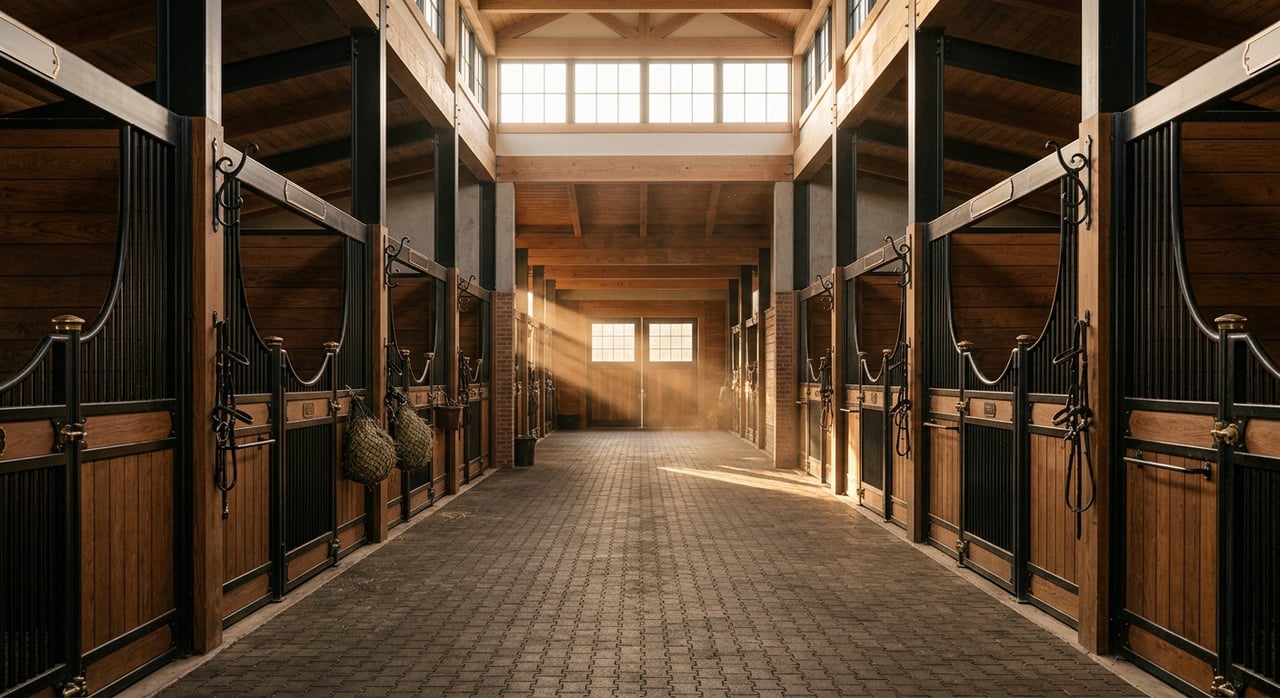
A barn can look charming and still be hard to use. For horse housing, guidance emphasizes drainage, ventilation, and safe materials. Those basics affect both horse comfort and the amount of upkeep you will face.
If the property relies on shelters instead of a full barn setup, size still matters. Constructed sheds are typically sized at 100 to 150 square feet per horse. For enclosed stalls, a standard size is 12 by 12 feet.
You should also think about placement. Barns should be close to turnout and easy for trailers and maintenance equipment to reach. If the barn is awkwardly located, routine chores can become much less convenient than they need to be.
Check fencing with a safety lens
Fencing is one of the first things experienced horse buyers inspect, and first-time buyers should do the same. Perimeter fencing needs to be safe, visible, and practical for the horses you plan to keep.
Commonly recommended options include wood or diamond mesh for perimeter fencing. Electric tape can be useful for subdivision fencing inside the property. Gates should latch securely and avoid pinch points that could create safety issues.
As you walk the property, pay attention to more than just appearance. Look at corners, gate placement, traffic flow, and whether fencing supports rotation and turnout management. A beautiful entrance does not tell you much about daily horse safety.
Be careful with arenas
An existing arena can be a major plus, but it should never be judged by appearance alone. Arena performance depends heavily on the base and sub-base, not just the top footing layer. A surface that looks finished may still need drainage or structural work underneath.
There is no single perfect footing for every rider or discipline. Footing should match the intended use, drainage needs, and your upkeep budget. For a first-time buyer, that means asking whether the current setup fits your goals or whether future improvements are likely.
Verify permits and local requirements
If the property is inside Navasota city limits, approvals and building work may be subject to the city’s formal process for plats, zoning changes, specific or conditional use, and building permits. The city development guide also lists adopted construction codes, including 2012 building, residential, fire, plumbing, mechanical, and energy codes, plus the 2011 electrical code.
If the tract is outside city limits, you still need to verify practical items before closing. That includes access, septic, driveway considerations, and any county-level requirements that may apply. For horse buyers, this step is especially important when you are planning to add barns, fencing, shelters, or other improvements later.
Ask about agricultural valuation early
Property taxes can change the true cost of ownership more than many first-time buyers expect. In Texas, agricultural or open-space special appraisal is based on productivity value rather than market value. That can make a meaningful difference in how a tract pencils out.
But you should never assume a property qualifies or will continue to qualify. Land has to meet local agricultural-use tests and degree-of-intensity standards, and a change to non-agricultural use can trigger rollback taxes. In Grimes County, the appraisal district handles ad valorem taxes and property-tax information, so this is something to confirm before you close.
Use local support as part of your plan
Buying your first horse ranch is easier when you know where to turn for practical guidance after closing. In Navasota, the Grimes County AgriLife office provides access to soil, water, and forage testing resources and has an Agriculture and Natural Resources agent on staff. That can be helpful when you are evaluating pasture quality or planning improvements.
Regional support also matters when horses are involved. Texas A&M’s Large Animal Teaching Hospital is in College Station, which gives buyers in the broader area another point of reference as they think about long-term horse care and veterinary planning. For many buyers, that local and regional support structure adds confidence.
Your first-purchase checklist
If you want to stay focused during showings, use a simple checklist built around function rather than curb appeal.
- Is the land relatively flat, usable, and well-drained?
- Does the acreage make sense for the number of horses you plan to keep?
- Is there a dry lot or sacrifice paddock for wet weather and pasture rest?
- Are the pastures in good condition, and do they support rotation?
- Do water access and shelter meet basic horse-care needs?
- Are barn size, stall layout, and location practical for daily routines?
- Is the fencing safe and set up for both perimeter security and interior management?
- Does the arena, if present, appear suitable for your discipline and upkeep budget?
- Have you verified permitting, access, septic, and improvement rules?
- Have you confirmed the property’s current or potential agricultural valuation status?
Why specialized guidance helps
Your first horse-ranch purchase has more moving parts than a typical home search. You are not just choosing a place to live. You are evaluating land systems, horse infrastructure, and future operating costs all at once.
That is where specialized equestrian property insight can make a real difference. When you work with an advisor who understands barns, footing, fencing, turnout, and pasture function, you can spot red flags earlier and weigh tradeoffs more clearly. If you are planning your first Navasota horse ranch purchase, Lisa Bricker can help you evaluate properties with both the lifestyle and the practical horse-use details in mind.
FAQs
What acreage should you look for in a first Navasota horse ranch purchase?
- A common starting point is about 2 acres per mature horse on well-managed pasture, but the right number depends on soil, drainage, terrain, and how heavily the pasture will be used.
Why does a dry lot matter on a Grimes County horse property?
- A dry lot or sacrifice paddock gives you a place to keep horses during wet weather or while pasture recovers, which helps protect the land and manage mud and manure.
What pasture grasses are common for horse properties near Navasota?
- Texas A&M AgriLife identifies bermudagrass, bahiagrass, and Dallisgrass as common warm-season perennial horse pasture options in Texas, with some cool-season grasses and annuals used to extend grazing.
What should you check in horse barns and shelters before buying in Navasota?
- Look for good drainage, ventilation, safe materials, practical access to turnout, and workable sizing, including sheds that are commonly 100 to 150 square feet per horse and standard 12 by 12 stalls.
How should you evaluate an arena on a Navasota horse ranch?
- Do not judge it by the top layer alone. Arena performance depends heavily on the base, sub-base, drainage, intended discipline, and the upkeep the footing will require.
What tax question should you ask before buying a horse ranch in Grimes County?
- You should confirm whether the tract currently has or may qualify for agricultural or open-space appraisal, and whether any future change in use could create rollback tax exposure.